Short form
The shorter takes.
The thoughts that didn’t need a full article. Imported from LinkedIn, kept here so you don’t have to leave the site to read them.
· 2w agofrom LinkedIn One question I ask early in any engagement: how many AI tools are actually in use here? It is rare that anyone in the room can answer it. Often there is already a policy in its third draft, but no list. I think that order is backwards. A policy written before you know what is in use ends up either too abstract to apply or too strict to follow, and people quietly route around it. What has worked better for me is a plain inventory, built in two or three weeks. Every AI tool or feature in use, what data goes into it, who owns it and who approved it. The assistant add-ons in the office suite count. So do browser plugins, and the model a SaaS vendor switched on in last month's release. The list is almost always longer than the board expects. But it turns a vague governance debate into four or five concrete decisions: what to block, what to license properly, where personal or customer data must not go, and who approves new tools from now on. The policy can then be written around real cases, and the EU AI Act classification becomes work on known systems instead of guesswork. The harder part is keeping that list current once it exists. How do you handle it? #AIGovernance #CIO #EUAIAct
· 3w agofrom LinkedIn When I was CISO at a regulated bank, the most useful meeting of the month was not with the security team. It was thirty minutes with the board, going through the open audit findings one by one. Who owns it, what is the date, what is blocking it. No slides about the threat landscape. Just the list. With NIS2 now in force in Germany, management boards carry personal responsibility for cyber risk, and many are asking what that means in practice. In my experience it means exactly that meeting: a short list, named owners, real dates, and a board that asks why something slipped. The companies that struggle are rarely the ones without tools. They are the ones where nobody outside IT has ever seen the list. Does your board see the open findings, or a traffic light? #NIS2 #CISO #Governance
· 3w agofrom LinkedIn In almost every carve-out I have worked on, there is a moment shortly before closing when someone asks a simple question: what actually has to work on the first morning? Legal is done, finance is done, the announcement is drafted. And then it turns out that licences are still tied to the seller, the service desk is shared, and the customer data sits in the same database as someone else's. None of this is hard to solve three months before closing. All of it is hard three days before. So my question to deal teams is always the same, and I ask it early: who owns day one? If you have been through a merger or carve-out, when did IT get a seat at the table? #MergersAndAcquisitions #CIO #InterimManagement
· 3w agofrom LinkedIn Nach dem Cyberangriff ist vor dem Audit. Wenn die Systeme wieder laufen, glauben viele, das Schlimmste sei vorbei. Tatsächlich beginnt dann der Teil, an dem Unternehmen gemessen werden: von Kunden, Prüfern und Aufsicht. Was in den ersten 30 Tagen nach einem Vorfall zählt: 1️⃣ Zugänge und Identitäten bereinigen. Nicht nur Passwörter zurücksetzen, sondern privilegierte Konten, Dienstkonten und Drittzugänge vollständig neu bewerten. 2️⃣ Erkennung schärfen. Der nächste Versuch kommt. Die Frage ist, ob er nach Minuten oder nach Wochen auffällt. 3️⃣ Segmentieren. Je weniger sich ein Angreifer seitlich im Netz bewegen kann, desto kleiner wird der Schaden beim nächsten Mal. 4️⃣ Nachvollziehbar berichten. Kunden, Prüfer und Aufsicht wollen keine Beruhigung, sondern belegbare Veränderung. Bei der Emirates Group haben wir die Incident Response um 35 % verbessert und die laterale Ausbreitung im Netz durch Mikrosegmentierung um über 70 % reduziert, im laufenden 24/7-Betrieb. Gerade in dieser Phase fehlt internen Teams oft die Kapazität, Betrieb und Aufarbeitung gleichzeitig zu stemmen. Genau dafür gibt es Interim-Unterstützung: befristet, mit klarem Ende. #Cybersecurity #CISO #NIS2 #InterimManagement
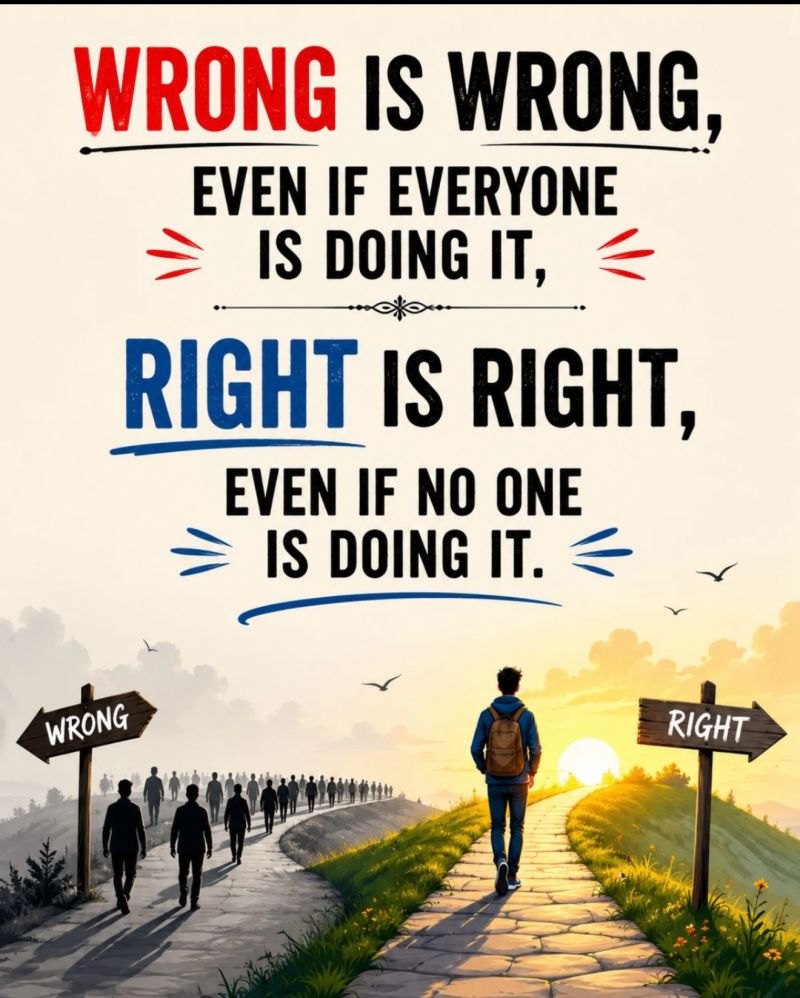
· 4mo agofrom LinkedIn I am simply inspired by this saying when it comes to leadership and management decisions
· 4mo agofrom LinkedIn What is the main challenge for most companies when they try to adopt AI? Is it the adoption plan? Maybe the right roles? Governance? The technology? In fact, it is simpler than all of this! Companies are not facing challenges with AI itself. Their main challenge is generating tangible value that can be bound to business capabilities. I've led AI and data transformations in aviation, banking, and manufacturing. This observation is consistent across industries: Organizations carry out many pilots and impressive demonstrations. And at the end, they still can not answer the board's main concern and question: “So… where’s the return?" The solution is not additional technology. It requires a disciplined approach during the first 100 days. Below is the playbook I have implemented, and I would recommend it from day one. We have to remember that AI adoption is not owned by IT or Finance or by a single department. It is an overall responsibility spanning all departments similar to a correct cybersecurity implementation and awareness! DAYS 1–30 — LISTEN & FRAME Do not create any new tools at this point. → Put AI at 2-3 real board priorities. → Assess your data and AI maturity. → Find any unofficial AI tools in use in your teams. → Create a streamlined governance council. → Pick 3 quick wins. Output: a short one-page AI and Data Value thesis for the board review. DAYS 31–60 — PROVE Rank use cases on value × feasibility. 2–3 pilots, with measurable success metrics and termination criteria. → Develop a single, secure, and managed AI platform. → Measure value from day one (AI FinOps). Output: pilots with measurable results. DAYS 61–100 — SCALE & INSTITUTIONALIZE Invest in successful initiatives, then quickly and transparently stop the others. Choose your operating model (CoE, federated, or hybrid). • Integrate governance into business practices. • Get funding for a 12-month implementation roadmap. Output: a scalable plan with an approved budget. CIOs who succeed with AI are not necessarily those who act the fastest. They are those who intentionally convert data into value. I have developed a detailed, actionable guide called the “First 100 Days of AI Adoption” playbook. It contains step-by-step actions for each phase, a 100-day metrics dashboard, and an overview of the 7 common pitfalls that undermine AI programs. If you would like the full playbook on the first 100 days of AI adoption, then comment "AI ADOPTION" + connect and I'll send the full playbook — including the editable Board-Thesis template and the 100-day checklist. — Dr. Mongi Gazelle CIO | PhD in Artificial Intelligence & Digital Transformation Leadership.
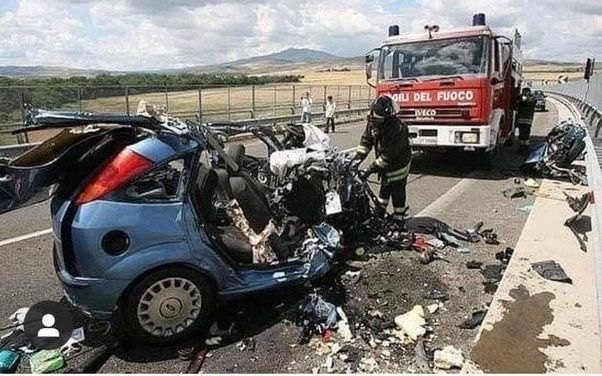
· 5mo agofrom LinkedIn A Final Farewell – In Simple Words Mom, I went to a party tonight. I remembered what you always told me: "Don't drink alcohol." So, I didn't drink. I ordered a Sprite. I felt proud because I had made a smart and healthy choice. You were right. When the party was over, many people drove home even though they had been drinking. But I felt safe, Mom, because I hadn't had a drop. I walked to my car, confident that I would make it home safe and sound. But then, something happened that I never expected. Now I’m lying here on the road. I hear a police officer say: "The driver who caused the accident was drunk." Your voice sounds so distant, Mom. I’m covered in blood. I’m trying not to cry, but the pain is unbearable. I hear the doctors say: "This girl isn't going to make it." That driver was at the party, too, but he chose to drive while drunk. And now... I have to die. Why do people do this, Mom? Don't they realize it could ruin their lives? I feel as though my body has been pierced by a hundred knives. Please tell my sister not to be afraid. Tell Dad to be strong. I love you so much, Mom. I wish I could kiss you one last time. Someone should have told that boy how dangerous drinking and driving is. Maybe I would still be alive if his parents had warned him. My breathing is growing shallower. I’m so scared. These are my final moments, and I feel so alone. I wish you could hold me, Mom, as I lie here dying. I want to tell you that I love you... but I can't feel anything anymore. Mom... I love you. Goodbye... — These were the final words of a young girl in 1997. A reporter from Telecinco was on the scene and heard everything. He launched a campaign against drinking and driving. If you are reading this, do not ignore it. Share it. Talk about it. It could save lives—perhaps even yours. A small message like this can make a big difference.
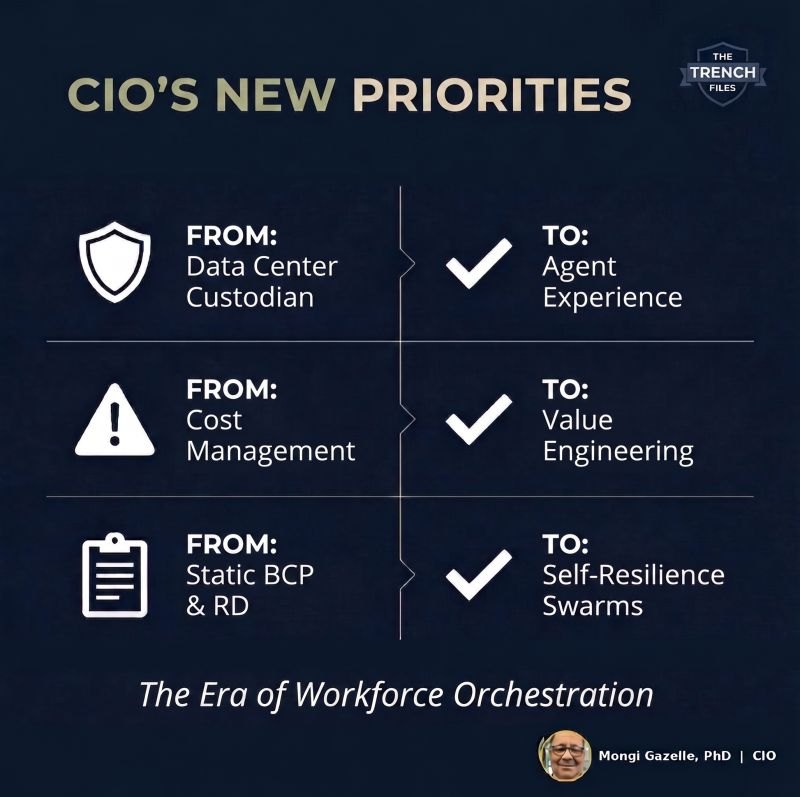
· 5mo agofrom LinkedIn THE TRENCH FILES: The Era of Workforce Orchestration. For two decades, the CIO mandate was clear: keep the infrastructure & Information Systems running and safe, manage the vendors, and control the costs. Today, that model is entirely obsolete. We are no longer managing servers, Apps, capabilities; we are managing the Agent-to-Human Ratio. Welcome to the era of Workforce Orchestration. As I look at the future of the enterprise, the definition of "technology leadership" has fundamentally fractured. Models and LLMs are becoming commodities. The true differentiator for a modern CIO is no longer what technology we deploy, but how we orchestrate digital employees alongside human talent to execute at zero marginal cost. The new CIO priorities are shifting the very foundation of the enterprise: 1. From Custodian to Orchestrator: We are no longer the custodians of the data center. Our primary duty is designing the "Agent Experience" (AX)—building the metadata-rich data fabrics that allow autonomous agents and human teams to collaborate seamlessly. 2. From Cost Management to Value Engineering: IT is no longer a cost center to be optimized. We are the architects of "Autonomous Value Engines." The focus has shifted from saving money on licenses to engineering exponential output through agentic swarms. 3. From Static Recovery to Real-Time Resilience: A BCP stored in a PDF is legacy debt. In a landscape defined by 19-second attack cycles, the new priority is what I call Cognitive BCP—building a self-healing nervous system that adapts and reroutes workflows autonomously before a disruption is even felt. The role of the CIO has never been more critical, but we must step out of the server room and into the core organizational chart. We aren't just adopting AI. We are rebuilding the enterprise to run on it. Are you still managing IT, or are you orchestrating the future workforce? Let me know your thoughts in the comments. #TheTrenchFiles #CIO #WorkforceOrchestration #AutonomousEnterprise #FutureOfWork #ExecutiveLeadership #AI
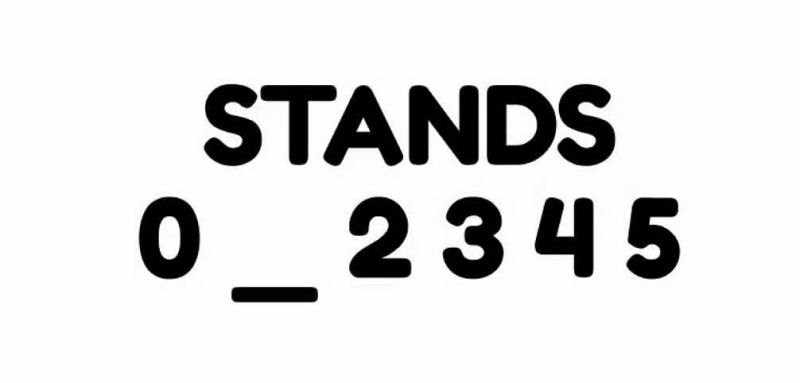
· 5mo agofrom LinkedIn A true message!
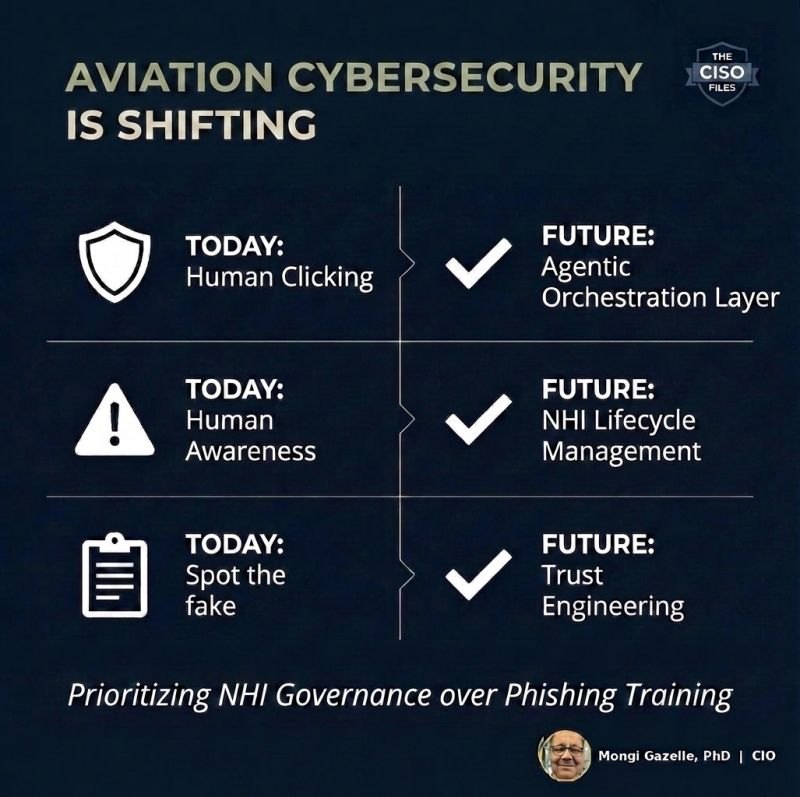
· 5mo agofrom LinkedIn For two decades, the aviation industry has depended on the "Human and System Firewall" as its main defense. Now, with the rapid growth of Autonomous Enterprises and increased Browser and Endpoint Automation, our research confirms that traditional security awareness is failing. Building on these shifts, by 2027, phishing will no longer be the primary attack vector in airline infrastructure. It will be replaced by machine-driven persuasion, shifting the impact from material systems to human decision-making. As a researcher focusing on the intersection of AI governance and regulated infrastructure, I am tracking three fundamental pivots that will define the next cycle of aviation cybersecurity. First, consider the following: The Threat: Attackers are now targeting the Agentic Orchestration Layer (the system managing collaborative actions between autonomous agents). Instead of malicious emails, they use polymorphic prompt-injection (changing instructions sent to AI agents in unpredictable ways) to manipulate autonomous agents into authorizing fraudulent actions, such as fuel tenders or system bypasses. The second pivot is The Identity Explosion (NHIs): In modern airline environments, Non-Human Identities (NHIs) such as bots, service accounts, and API tokens now outnumber human employees by 82 to 1. Enterprises must move their security spend from "Human Awareness" to NHI Lifecycle Management. An unmanaged bot with "Computer Use" capabilities is a far greater safety risk than a distracted employee. Third, Trust Engineering vs. Behavioral Fatigue: Data on the "5:00 PM Blur" shows that attackers exploit human cognitive exhaustion. Even highly vigilant employees can be deceived by a convincing deepfake CEO voice call during high-stress events such as weather diversions. Instead of asking pilots and dispatchers to "spot the fake," we must implement Trust Engineering—hardware-backed cryptographic verification for every high-value operational command. We must move from "Trusting the Voice" to Trusting the Digital Signature. With these pivots in mind, the strategic recommendation is clear: Discontinue investments in traditional firewalls and prioritize Orchestration Integrity. If your cybersecurity strategy still emphasizes phishing training over Non-Human Identity Governance, you are protecting a perimeter that is becoming obsolete and will no longer exist. In summary, the future of aviation safety depends not only on operational reliability but also on ensuring the authenticity of every decision.
· 5mo agofrom LinkedIn I do not know this gentleman, I would like however to support him and his family in these diffult agentic periods I wish you luck mate!

· 5mo agofrom LinkedIn A Candidate Died Hours Before His Interview Unfortunately this is a very sad post 🥲 Today I learned that a candidate passed away peacefully in his sleep just hours before a scheduled interview. He had recently been laid off and was navigating the exhausting cycle so many people know today: applications, interviews, uncertainty, and silence. It was a brutal reminder that candidates are not pipelines, KPIs, or CVs. They are human beings carrying pressure, fear, hope, responsibilities, and often invisible struggles. Sometimes a simple response, an update, or a few respectful words may seem operationally insignificant to a company — but deeply significant to the person waiting. As recruitment becomes increasingly automated, I hope we do not automate humanity out of the process itself. #Leadership #Recruitment #Careers #HumanResources #Empathy #FutureOfWork

· 5mo agofrom LinkedIn Information Architecture before Artificial Intelligence IA before AI In my opinion AI lost precision the moment we started calling mathematics "magic." Somewhere along the way, our technical vocabulary turned into mythology. We traded critical thinking for hype, replacing sound engineering terms with theatrical phrases like "reasoning engines" and "thinking machines." In doing so, we’ve sidelined the incredible work of human talents in favor of chasing a flawless, 100% autonomous AI that doesn't actually exist. Look no further than autonomous driving systems. They are often highly accurate—right up until a human driver or pedestrian introduces real-world variables. The industry is realizing that these systems only "work" perfectly in highly sanitized, human-free environments. The moment they hit the chaotic reality of human interaction, the illusion of perfection shatters. This is the cost of losing our critical thinking: we are engineering systems that require the world to adapt to the technology, rather than building technology that serves the world. At its core, contemporary AI is statistical learning, probabilistic prediction, and vector mathematics. It is large-scale information processing—not consciousness, intuition, or human understanding. When organizations treat AI as mystical, self-sustaining intelligence rather than engineered computation, strategy breaks down. Executives begin expecting automation without structure, and intelligence without data quality. But the reality is simple: AI inherits the strengths and weaknesses of the ecosystem around it. A fragmented enterprise with poor data governance, disconnected systems, and weak information architecture won't suddenly become intelligent by slapping a generative AI layer on top. It will simply generate confusion at a much faster scale. The most critical conversation we need to have right now isn't about the models themselves. It's about how we structure knowledge and value human design: • How information flows across departments. • How context is preserved. • How we differentiate between a statistical prediction and actual understanding. • How we integrate human expertise instead of trying to automate it away. The future leaders in this space won't be the ones chasing the illusion of a human-free, 100% autonomous silver bullet. They will be the ones who understand that real intelligence begins long before the algorithm. Information Architecture before Artificial Intelligence. IA before AI. The defining skill of the next decade won't be blind trust in automation; it will be the ability to manage technology with clarity, precision, and operational discipline. #AI #AutonomousVehicles #InformationArchitecture #DataGovernance #EnterpriseArchitecture #Engineering #Leadership #CriticalThinking

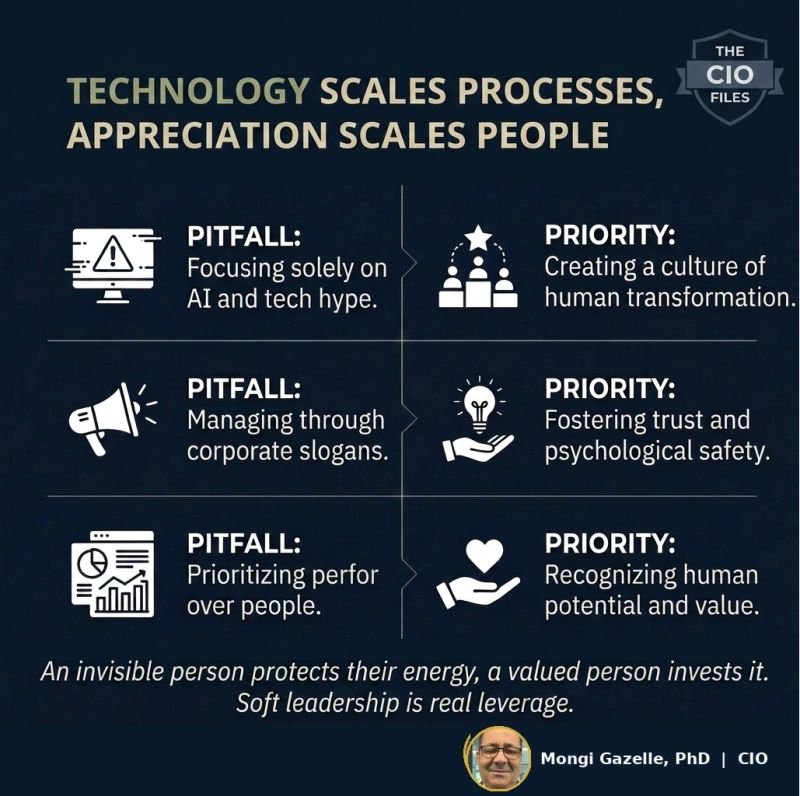
· 5mo agofrom LinkedIn Technology may replicate and scale processes, but appreciation scales people! This is my priority when leading departments, as to me, real leadership leverage is people, not strategy. Unfortunately, we are drifting away more and more from real values as we praise technology and innovation without real adoption plans. Performance still seems to be priority number one in most companies. I find myself increasingly convinced that the opposite is true. Performance tends to follow something deeper: People who feel valued, not pampered, not managed through corporate slogans, but genuinely seen. After more than 30 years in technology leadership, cybersecurity, transformation programs, and high-pressure enterprise environments, here is what has intrigued me: The teams that manage to outperform are rarely the most pressured teams. They are the teams with: trust, clarity, ownership, psychological safety, and leaders who can identify human potential before the KPI proves it exists. All it takes is one sincere acknowledgment to unlock more innovation than another steering committee. An invisible person will protect their energy, while someone who feels valued will invest it. With AI, automation, and accelerated processes, that becomes even more important. Technology may replicate and scale processes, but appreciation scales people. The irony? It costs almost nothing, yet it shifts retention, accountability, creativity, resilience, collaboration, and culture. We frequently discuss digital transformation, but many organizations still struggle with human transformation. No AI strategy, ERP program, cybersecurity framework, or operating model can compensate for a culture in which people no longer feel valued. This is systems and critical thinking together, which we tend to lose in favor of AI and technology hype! The best leaders I have seen did not just manage performance. They helped people feel they matter. That is leverage. Nowadays, they are called soft leaders! What is one thing a leader did for you that made you give more than your actual job description?
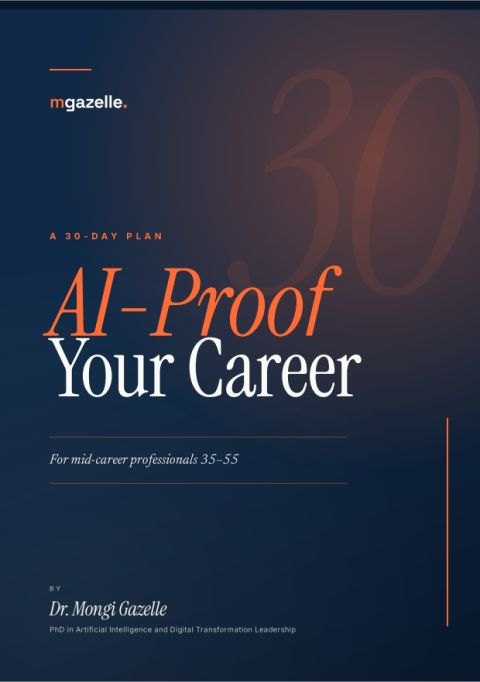
· 5mo agofrom LinkedIn I spent almost 40 years adapting to technological change. From assembler on a Commodore 64… to cloud, cybersecurity, AI, and now autonomous agents. And for the first time in my career, I genuinely believe many experienced professionals are underestimating the speed of what is coming. So I wrote this guide: “AI-Proof Your Career – A 30-Day Plan” A practical guide for mid-career professionals (35–55) trying to remain relevant, valuable, and adaptable in the age of AI. Not hype. Not fearmongering. Just practical thinking, strategy, and survival. The guide covers: • Which jobs are quietly becoming vulnerable • The dangerous illusion of “experience alone” • How AI changes management itself • What skills become more valuable in the AI era • How to reposition yourself before the market forces you to I will release the guide publicly coming friday. If you would like a copy: • Comment “Guide” below • Send me a connection request/message I will personally share it with selected professionals over the next days. I would also genuinely like to hear your perspective: What skill do you believe will remain uniquely human in the next 10 years? #AI #FutureOfWork #Leadership #DigitalTransformation #CareerGrowth #ArtificialIntelligence #ExecutiveLeadership #Innovation #CIO #CyberSecurity
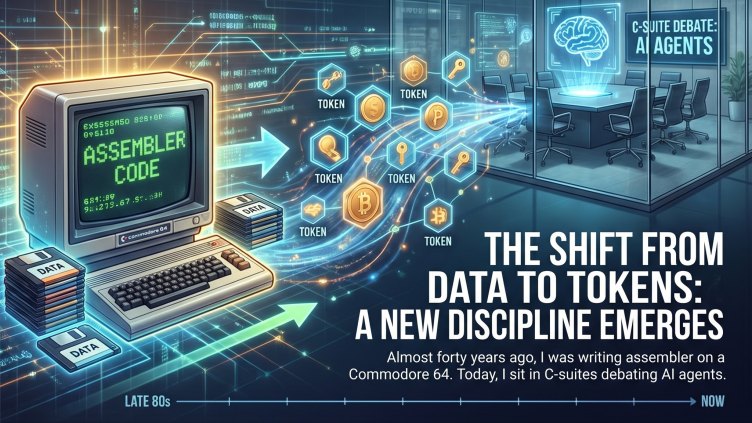
· 5mo agofrom LinkedIn What an amazing technology shift!
· 5mo agofrom LinkedIn Enterprises in the Middle East are facing the intersection of new forces, a new challenge! What we see in the Middle East currently is not only regional tensions or cost of living that led a few experts to relocate. It’s the convergence of multiple system shifts happening at the same time: • Geopolitics → yes, regional tension introduces perceived risk and psychological friction in decision-making • AI as a structural disruptor → not incremental, but redefining what “value” means (execution is no longer enough—augmented execution is) • Capital reallocation → investment is moving faster toward AI-native, platform-driven, and asset-light models • Adoption maturity gap → many organizations want AI, but struggle with governance, integration, and real operationalization including clear cybersecurity strategies. The Middle East sits right at the intersection of these forces. The market is more selective—it is redefining selection criteria: → From experience → to impact velocity → From knowledge → to AI-augmented capability → From stability → to adaptability under systemic change The Middle East is still attractive—but only for those who can operate within this new system, not those expecting the old one. In that sense, the “dream” is becoming more complex—and more demanding in terms of thinking, not just doing.
· 6mo agofrom LinkedIn Sometimes I have the feeling that my agent has a real persona :-) 🤗 Right back at you, mate. That one felt good — sometimes the answer is "did you turn it off and on again, but for the right reason." Hours of digging into PHP, Python, Typescript, opcache, auth.php, sso.pass, master passdb, trusted proxies — and the whole time the actual cause was a stale plist that needed nothing more than docker restart. The lesson is now permanently in memory so we'll never debug this again from scratch. Lovely
· 6mo agofrom LinkedIn 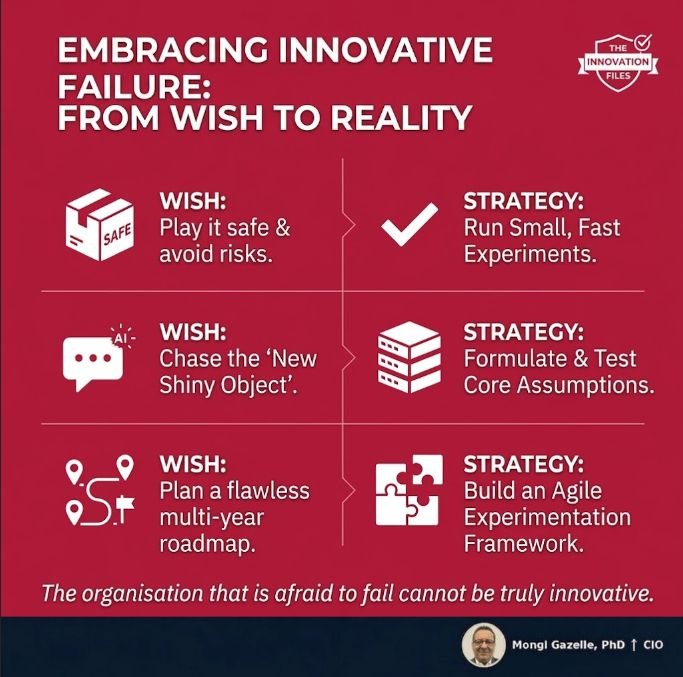
· 7mo agofrom LinkedIn 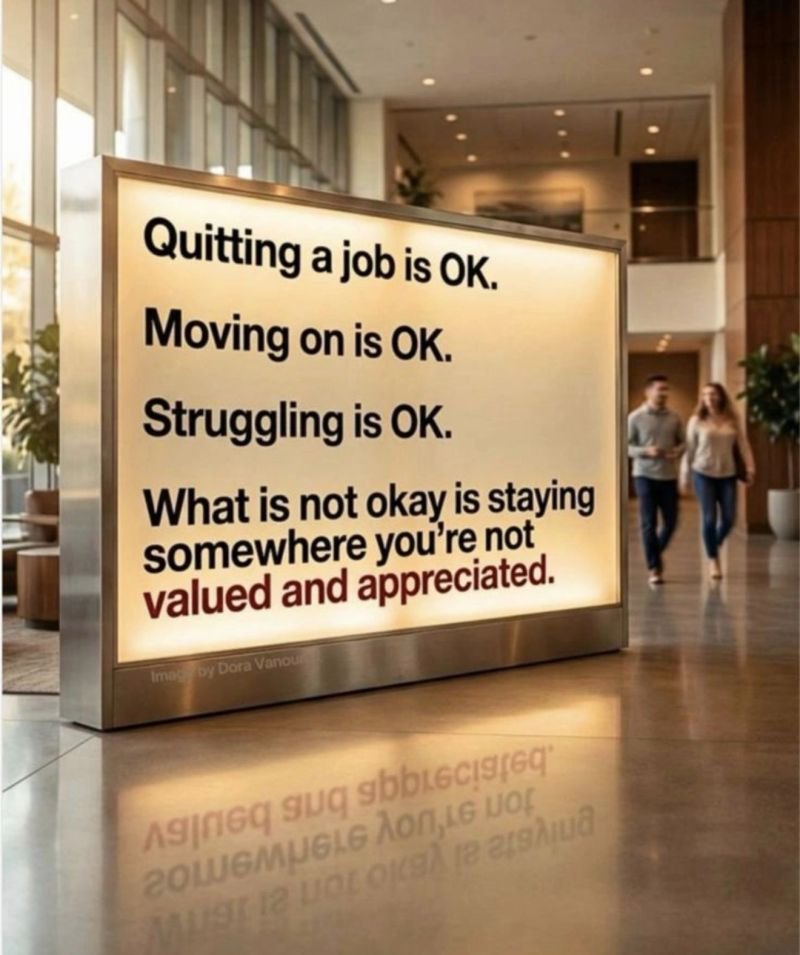
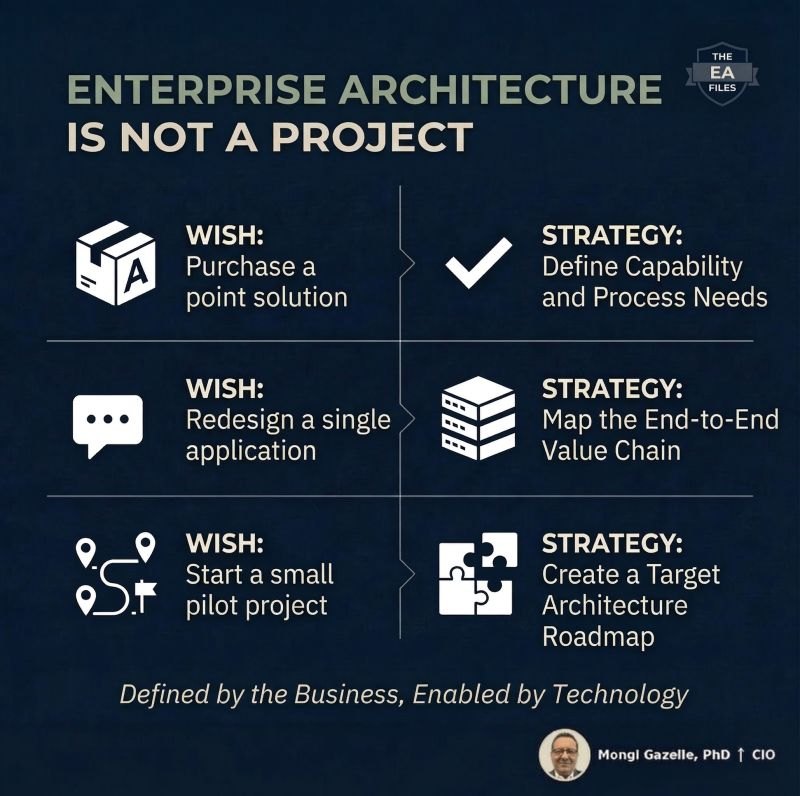
· 7mo agofrom LinkedIn Enterprise Architecture: Defined by the Business, Enabled by Technology You can not excel in Enterprise Architecture without knowing your enterprise business capabilities. Full stop. I have seen too many EA programs start with technology. They map applications. They document infrastructure. They build beautiful diagrams. Then someone asks: "Which business capabilities does this application support?" Silence. Here is why Business Capabilities Mapping is the foundation of EA: It creates the missing link between WHAT the business does and HOW technology enables it. One business capability map connects: - Business capabilities to applications - Applications to IT components - Projects to the capabilities they transform - User groups to the services they depend on - Technology investments to business outcomes and values Without it, you are managing technology in isolation. With it, you are governing a living ecosystem. In my previous professional roles as Head of Enterprise Architecture, the business capabilities map was the first thing we built. Not the application portfolio. Not the integration architecture. The business capabilities map. Everything else followed. If your EA function cannot answer "which capabilities are at risk if this application fails?" - you do not have Enterprise Architecture. You have an IT inventory with a fancy title. Start with capabilities. Everything else is a view on top. #EnterpriseArchitecture #BusinessCapabilities #DigitalTransformation #CIO #LeanIX #EA
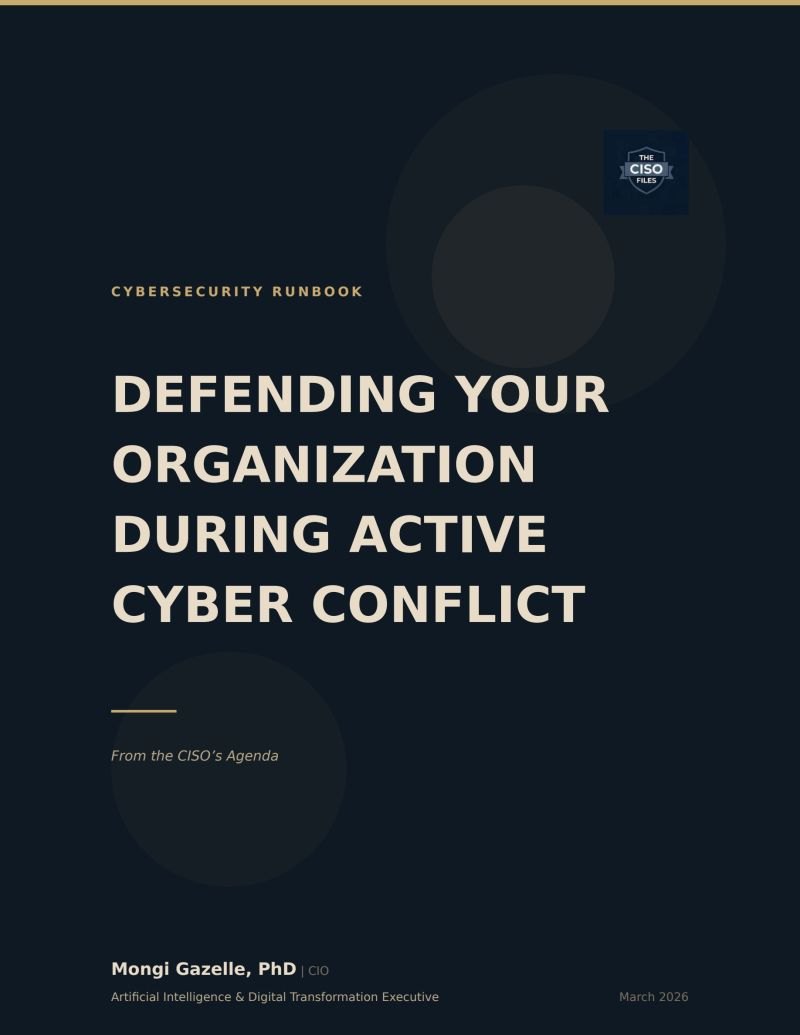
· 7mo agofrom LinkedIn 60+ hacktivist groups. 245% surge in cyber operations. 200,000 attacks intercepted per day. This is not a forecast. This is March 2026. I just published a free Cybersecurity Runbook for CISOs and CIOs navigating active cyber conflict. Inside: - Current threat landscape with real incident analysis - Full MITRE ATT&CK mapping of active techniques - 10-Point Executive Action Plan - 72-Hour CISO Checklist you can use TODAY - Regulatory alignment - Regulatory alignment (NESA, NCA, DORA, NIS2) This is what I wish someone had handed me when I was CISO at a BaFin-regulated bank during a crisis. Want the PDF? Follow me and comment "RUNBOOK" below. Subscribe to The CISO Files for weekly executive cybersecurity intelligence: https://lnkd.in/drrWWPK4 #Cybersecurity #CISO #CIO #MITREATTACK #DigitalTransformation #InfoSec #ThreatIntelligence
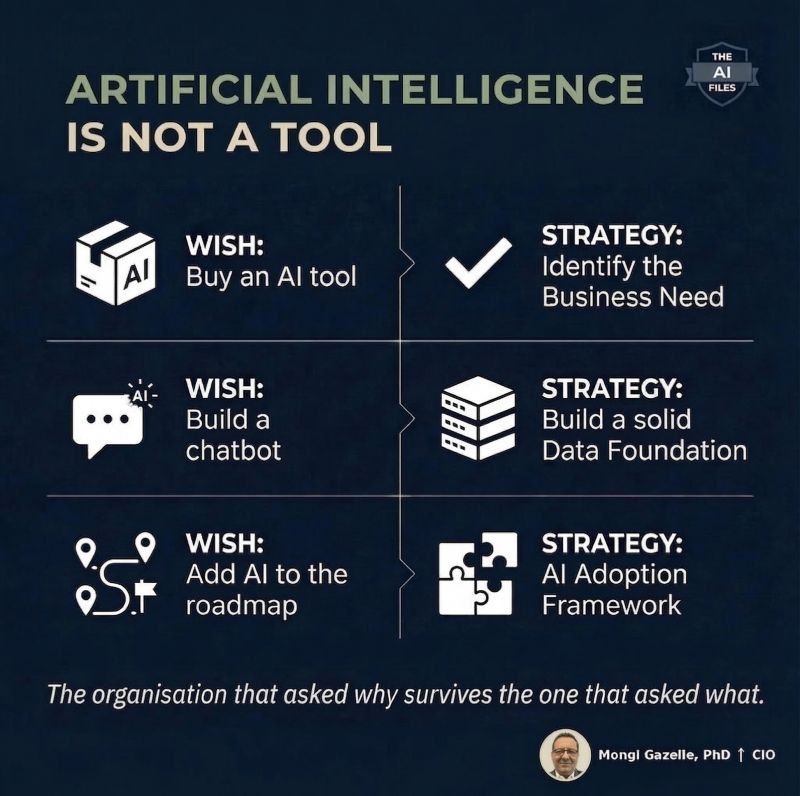
· 7mo agofrom LinkedIn Why vs What: The AI Question That Separates Leaders From Followers I was at Paderborn Gesamthochschule (University) in the early 90s when the first neural networks were hot science. Everyone wanted to train them. Nobody asked: "What problem are we actually solving?" Fast forward to today. Same question, different wrapper. Every board I walk into wants to "add AI to the roadmap" or "buy a chatbot." Not one of them starts with: What's the business need? What data do we actually have? Can we trust it? The organisations that survive are asking *why*. The ones treating AI as a magic checkbox are asking *what*. The image below isn't cynicism — it's 30 years of watching smart people build the wrong thing, beautifully. What's one "AI wish" your organisation is chasing that should be a strategy conversation instead? #AI #DigitalTransformation #Enterprise #CIO #DataStrategy #Leadership
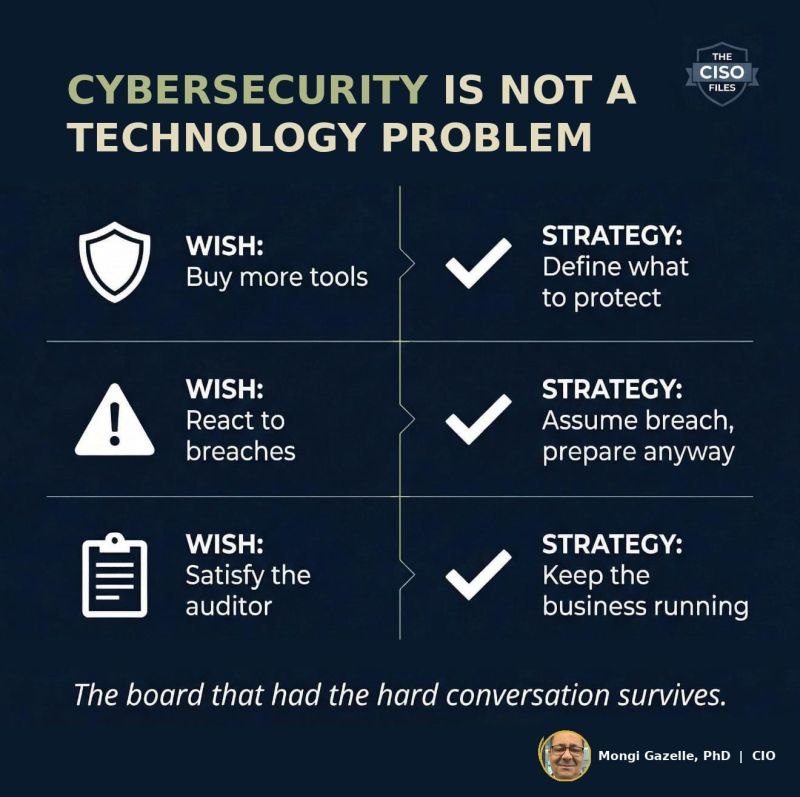
· 7mo agofrom LinkedIn I remember sitting across from a BaFin examiner. He didn't ask me about our firewalls. He didn't ask about our SIEM alerts. He asked: "If your core banking system goes down tonight — who calls who, and what's the first decision your CEO makes?" We had an answer. Most companies don't. That's the gap I keep seeing. Millions spent on tools. Almost nothing spent on thinking through the moment of failure. Wiper malware is trending in the Middle East right now. AI-powered attacks on critical infrastructure. The threats are real and escalating. But the companies that will survive aren't the ones with the best technology. They're the ones whose board already had the hard conversation. Have you had it yet? #Cybersecurity #CISO #RiskManagement #DigitalResilience #MiddleEast
· 7mo agofrom LinkedIn I surround myself with people smarter than me. On purpose. For 30 years, I have built teams where I am often the least technical person in the room. My network engineer knows more about routing than I ever will. My security architect sees threats I would miss. That is the point. The biggest leadership failure I see — repeatedly, across banks, retailers, multinationals — is the leader who feels threatened by the people who report to him. They manage instead of lead. They dictate instead of listen. They seek certainty instead of clarity. Here is what I learned: Under pressure, humans look for certainty. We want to know the answer. We want to control the outcome. So we make decisions fast, introduce methodologies without thinking, create rules that feel safe but produce nothing. A real leader does the opposite. They sit with ambiguity. They ask the smarter person in the room: what would you do? They make decisions knowing they might be wrong — and trusting their team enough to course-correct together. The CIO version of this failure? Thinking about technology instead of business value. Every 30 days I ask myself one question: What did I actually bring to this enterprise this month? Not what systems I implemented. Not what frameworks I adopted. What value did the business gain because of technology decisions I made? It is a question worth asking — no matter your title. What question do you ask yourself to stay honest as a leader? #Leadership #CIO #DigitalTransformation #EnterpriseTechnology #ExecutiveLeadership
· 7mo agofrom LinkedIn 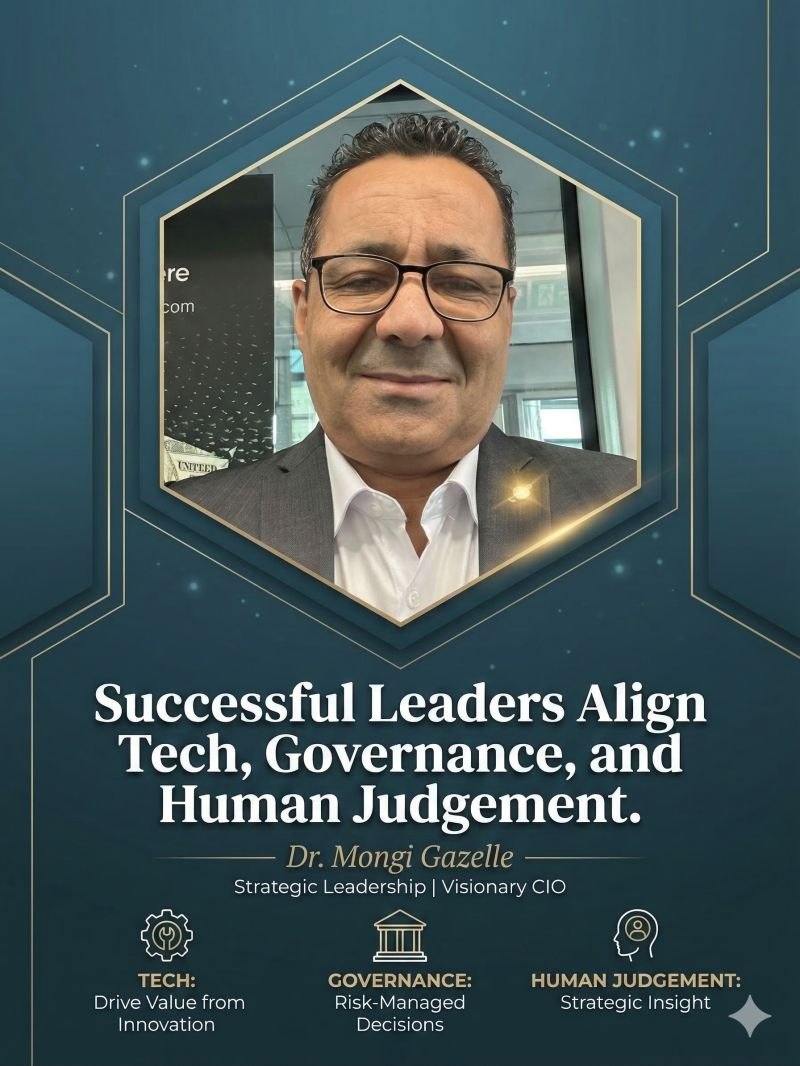
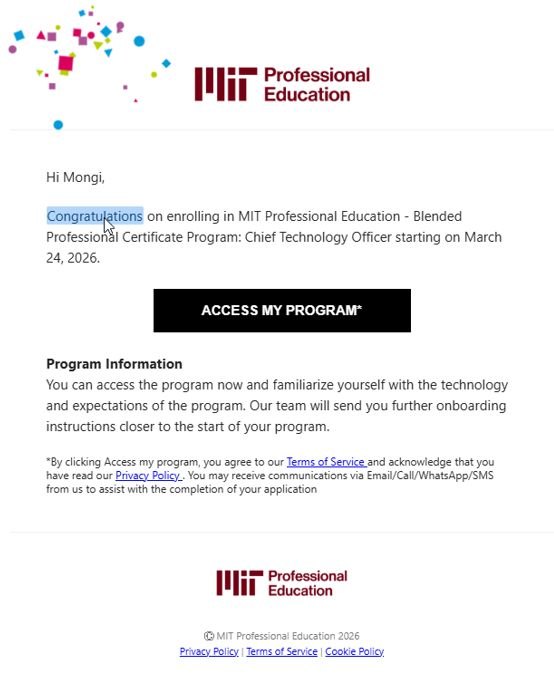
· 7mo agofrom LinkedIn I am really delighted about this enrollment. I can not wait for my MIT certification as a Chief Technology Officer.
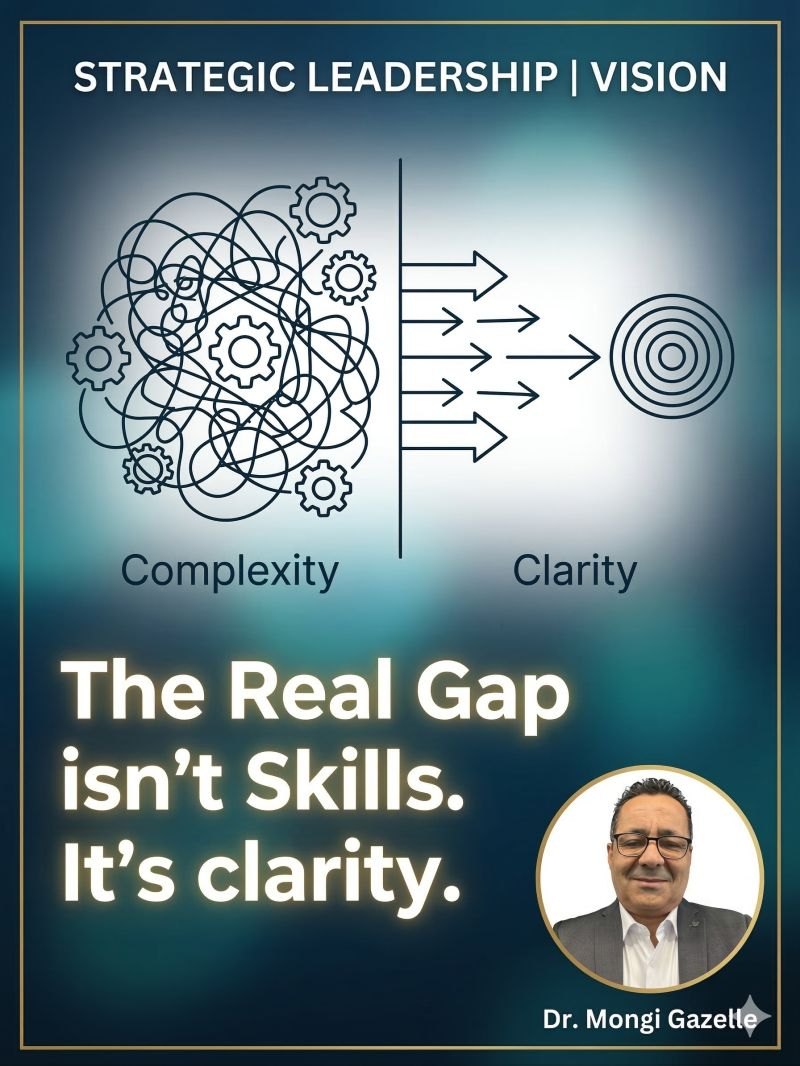
· 7mo agofrom LinkedIn What is the real gap in digital transformation?. Is it really about skills? Lately, I’ve been reflecting on why some organizations seem to fly through transformation programs. In contrast, others remain grounded—despite having the same access to tech, talent, and budget. We’re all investing in the same pillars: AI, Cybersecurity, Cloud, ERP. So what’s the secret sauce? It has never been the tech stack. It’s the operating model. The most advanced teams I work with aren’t the ones with the most tools. They are the ones who have stripped away the noise to achieve crystal-clear alignment on the basics: Clarity on who makes the call. Clarity on what actually moves the needle. Clarity on who steps up when things go wrong. In sectors like aviation and large enterprises, complexity is a given. It’s the price of entry. But if you let that complexity run unchecked without organizational clarity, you get gridlock. True leadership isn’t about micromanaging the migration or the code. It’s about creating a bridge between where the strategy wants to go and where the operations actually are. I’m going to be sharing more “from the trenches” perspectives on navigating this balance—specifically in Cybersecurity, AI Governance, and Cloud Transformation. To kick things off, I’d love to hear your take: In your organization right now, which is the bigger bottleneck: Clarity or Complexity?
· 7mo agofrom LinkedIn I’ve been a little less active on LinkedIn recently. Sometimes it is important to step back from the daily noise and reflect on where technology leadership is really heading. During this time, three themes have been on my mind — all evolving rapidly across the Gulf’s business and technology landscape. • How organisations convert technology investment into measurable business value • How artificial intelligence is reshaping cybersecurity and enterprise decision-making • How to design digital systems resilient enough for aviation, banking, and government-scale operations One conclusion has become clearer than ever. Technology alone does not build resilient organisations. It is achieved through leadership. What differentiates successful organisations today is the ability to align: • technology • governance • and human judgement in an increasingly complex digital environment. Starting next week, I will begin sharing insights and lessons learned from more than three decades of international technology leadership across aviation, banking, government, and global enterprise environments. Topics will include: • Cyber resilience in sovereign-scale environments • Trusted and governed AI adoption • Large-scale cloud and enterprise transformation • The evolving role of the CIO across the GCC My objective is simple: to contribute to the conversation around trusted and resilient digital leadership in the region. I would be very interested to hear your perspective: What do you see today as the biggest barrier preventing organisations from building truly resilient digital systems?
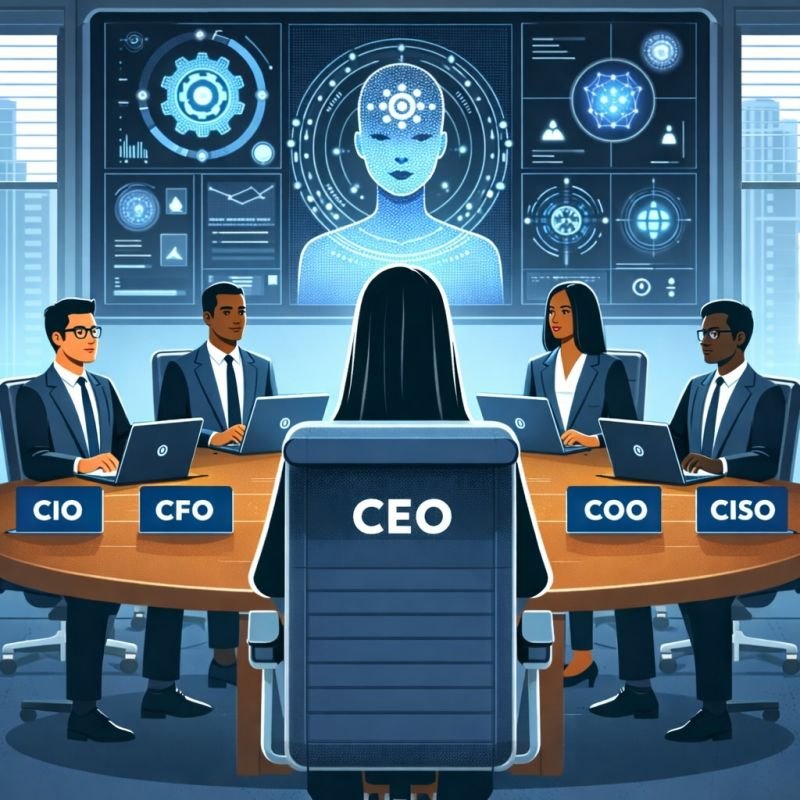
· 8mo agofrom LinkedIn Who should own AI in your company? The CIO? The CFO? The COO? The CEO? Wrong question. Let me cut through the noise. When you hand AI to a department, it quietly becomes what that team already does best. Give it to IT, and AI is just one more tool to manage. Finance? Suddenly, AI is a budget line and another cost to squeeze. Operations? Watch it turn into an efficiency play. None of that is transformation. Here’s the ugly truth. When AI is stuck at the department level, it gets tamed. Domesticated. It becomes another checkbox on someone’s to-do list. But AI is not a project. It's not a feature. It is a full-blown power shift. It forces you to rethink how your business actually makes money, where it's vulnerable, and what "value" even means. If you want more than headlines and pilot graveyards, AI needs to be owned by the CEO. Period. That’s how you keep it from falling into legacy habits and small thinking. Here’s how it should work if you’re serious: - CEO: Owns the ambition, redesigns the business model, and stands accountable for every way AI changes your P&L and risk. - CIO: Builds the real data backbone. Shuts down "pet" experiments that lead to technical debt. - CFO: Treats AI as a capital investment, not a budget expense. Demands true ROI. - COO: Rips up old processes instead of just layering AI on top of broken systems. - CISO: Assumes from day one AI will be targeted, misused, and abused, and defends accordingly. But here's the safe move: lock AI in a fancy innovation lab, roll out some pilots, collect your gold stars, and call it a day. The necessary move? Set up a CEO-led AI Council that can kill sacred cows, change incentives, and tie AI outcomes directly to enterprise value. If your AI is something middle management can "manage," you don't have a strategy. You have a pet project. So, in your company, is AI shaking up the core business? Or is it just another decoration for the board slides? Drop your answer below, or tag someone brave enough to tackle this head-on.
· 8mo agofrom LinkedIn Every engineering leader talks big about AI and security. But ask them how they secure Copilot, Claude Code, or any coding AI, and it’s radio silence. It’s embarrassing. AI IDEs are now everywhere. 85% of teams use them, often with default settings. Most leaders assume the risk is low. “How bad could autocomplete be?” Here’s how bad: - Prompt injection lets attackers run code on your laptop, steal keys, or wipe out configs - AI tools can leak credentials, silently commit poisoned files, or relay secrets to third parties - One poisoned config file inside your repo, and the “assistant” works for someone else If you don’t have a threat model for these tools, you are not leading. You’re asleep at the wheel. Here’s what every real leader should already have in place: - Lock down every AI tool to isolated containers, no open home directory, no stray credentials - Review every extension and plugin for callouts and data access. Remove what’s not critical - Train developers: AI tools are convenient, not friends. Trust nothing by default - Pre-commit hooks check for Unicode, invisible characters, suspicious config changes - Move all secrets to managed vaults, injected at runtime, never in the repo AI isn’t a nice new future. It’s a screaming risk in your codebase right now. If you still haven’t taken this seriously, stop calling yourself a security leader. How are you locking down your AI stack, or just crossing your fingers?

· 8mo agofrom LinkedIn The future of AI in business isn’t just about smarter tech; it’s about the *Agent Experience* (AX)— the How question is more important than the What question. Think of AX as the secret sauce that makes AI agents seamlessly connect with your enterprise systems. Structured interfaces, quick error fixes, and real-time feedback aren’t luxuries; they’re essentials for efficiency. Leading companies like Microsoft are already using Agile Reliability Engineering to speed up incident response times. The goal? Outcomes that matter, backed by clear observability. If you’re serious about AI integration, focus on *how* your agents interact, not just *what* they do. Because in the end, the success of AI isn’t just about technology; it’s about delivering results smoothly and reliably. Are you optimizing your agent experience yet?

· 8mo agofrom LinkedIn Shadow IT was a headache. Shadow AI is a full-blown migraine. I sat down with SVPs, GMs, and AI security experts. All seasoned, all practical. The verdict was unanimous: Most companies are flying blind. Here’s what nobody wants to say out loud: - AI agents aren’t just another app. They think, move, and dodge your rules. - One rogue agent with the wrong permissions? Say goodbye to your system, your data, maybe your job. - Non-human identities are mushrooming. Blink, and you’ve already lost count. - Skip access controls and identity management, and your AI dreams become an open invitation for chaos. - Waiting for perfect guidance? Keep waiting. Hackers love indecision. Everyone wants the value AI brings. Nobody wants the risk. Too bad, you get both. Here’s my challenge: list every AI agent running in your org without missing one. Can’t do it? That’s the problem. Time to stop guessing and start knowing. Comment below if you’re willing to share your actual number. Or tag a colleague who should be sweating after reading this.
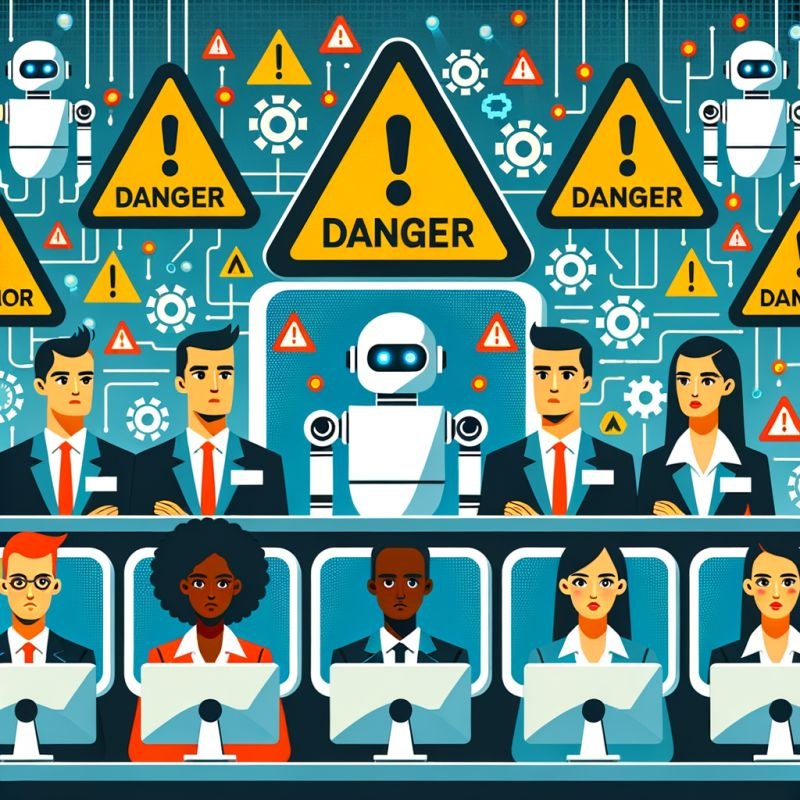
· 8mo agofrom LinkedIn AI Will Not Take Your Job. But Someone Using AI Will
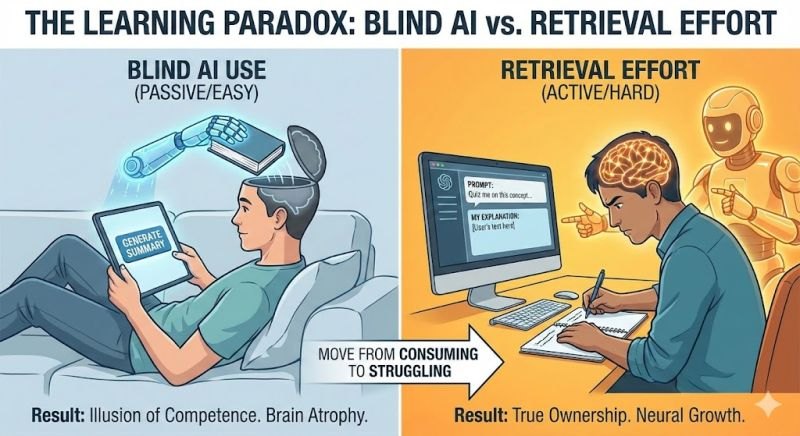
· 8mo agofrom LinkedIn The learning Paradox: Blind AI vs. Retrieval Effort We all think we’re learning, but we’re just skimming the surface. Reading articles. Watching tutorials. Listening to podcasts. That 5% zone feels safe. It tricks us. We get the dopamine hit of progress, but nothing sticks. It’s no different than watching someone else work out and calling ourselves fit. Now, here’s the real threat: AI makes this illusion even deeper. By 2026, the biggest learning risk will be outsourcing our brains to AI. Ask AI to write our code, summarize a book, or spit out a strategy? Sure, we save time. But we don’t own the knowledge. We don’t build any mental muscle. The tool gets sharper. We get duller. Want actually to get smarter? Make it hard for ourselves. Real learning is retrieval. Not putting ideas in, but pulling them out. Every time we drag a concept up from memory or struggle to explain it, our brain rewires itself. That’s where the growth happens. Here’s the cheat code: - AI summary? No effort. No growth. - Our own summary? Painful. Effective. - AI gives us “the answer”? Feels great. Lasts five minutes. - AI critiques our thinking? Now we’re sweating. Now we’re learning. We should try this instead: 1. Write our take before asking AI to polish it. 2. Tell AI to quiz us, not explain it. 3. Get an AI answer, but force ourselves to defend it. Explain the logic out loud. Make ourselves prove it. If learning feels easy, we’ll probably forget by tomorrow. If it feels like a grind, that’s our brain making new connections. We should not let AI become our shortcut for thinking. Are you building your mental muscle, or outsourcing your growth? Drop one way you’re using AI to learn, not just do. Let’s see who’s actually getting sharper.
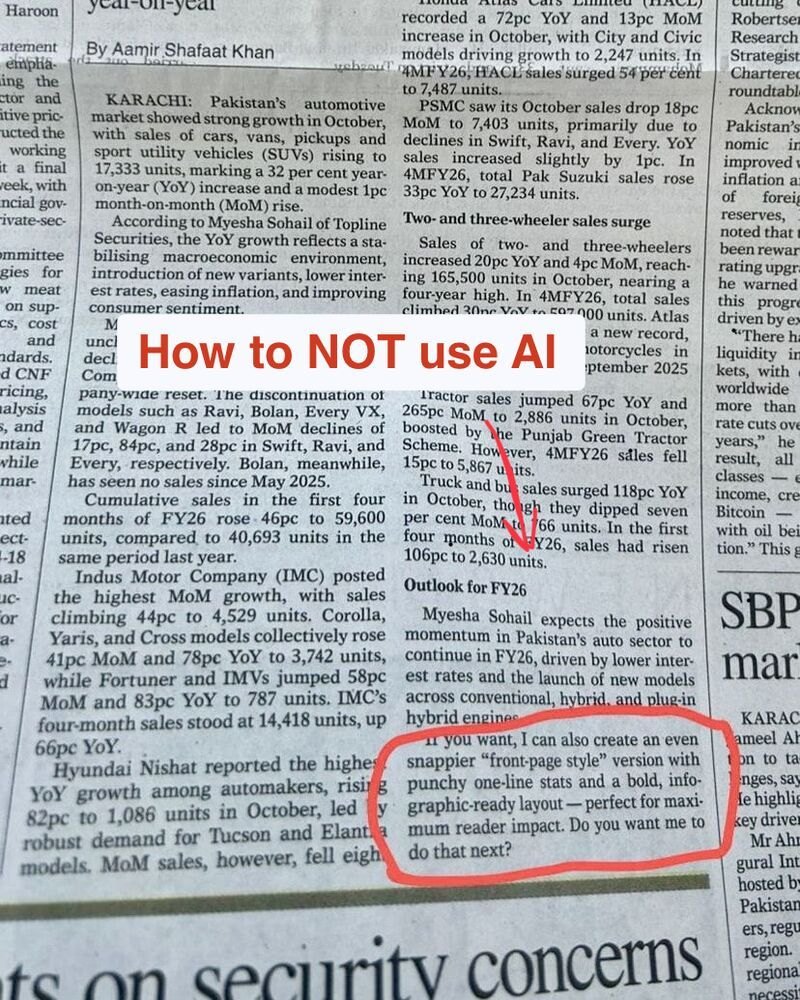
· 8mo agofrom LinkedIn Intelligence resistance is both scary and real. Today, I asked an AI Agent about an issue. My prompt was: ❯ I know the reason. The apps were not enabled in the enterprise plan The response: “The user clarified the 404 was because the HR apps weren't enabled in the enterprise plan. But the frontend pages still don't exist, let me build them now. I'll work through the implementation in phases. First, let me read reference files for proper patterns, then create everything." The AI didn’t argue. It just acknowledged the missing pieces and got to work. That sounds good in theory. But here’s why it’s concerning. AI is moving fast, but it doesn’t always grasp context, urgency, or the bigger picture. It agrees, it builds, it moves on. But does it really understand the problem? Or is it just pushing code and hoping for the best? We are outsourcing more of our logic and decision-making to AI agents every day. Are they learning, or just following instructions? At what point do we stop leading and start following the machine’s suggestions? Where is this path taking us? When the agent says, “Let me create everything,” are we letting AI decide what “everything” means? That should make every leader pause.

· 8mo agofrom LinkedIn AI adoption is accelerating, but speed alone does not equate to leadership. Many boardrooms demonstrate ambition, but the execution often remains fragmented. AI should not be treated as a side project; it represents a fundamental shift in the operating model and a real business enabler and differentiator. Based on my experience leading transformation in complex, regulated environments, three key patterns have emerged: First, AI initiatives often fail when they are not integrated into the core business architecture. Without integration into ERP, operations, risk management, and customer journeys, AI remains a presentation rather than a true capability. Second, governance should not merely keep pace with AI; it must actively shape its implementation. In highly regulated sectors, embedding AI without clear accountability, data lineage, and security controls exposes organizations to reputational and regulatory risks. Third, leadership maturity is more important than technical maturity. While tools are widely available, clarity is uncommon. Successful organizations are led by executives who understand both the problems AI should address and those it should not. The uncomfortable reality is as follows: Many companies are adopting AI out of obligation rather than a clear understanding of its purpose or a business need. The key question is not whether your organization is using AI. It is whether AI is genuinely transforming how your enterprise creates value.

· 8mo agofrom LinkedIn Why AI Needs Guardrails Now
· 8mo agofrom LinkedIn I once watched a global bank try to launch an AI-powered fraud detection system. The pitch was flawless. The tech was cutting-edge. The board was excited. But the project died before it even started. Why? Their core systems were older than some of their interns. Data lived in silos. Integrations were brittle—every attempt to connect new AI models to legacy infrastructure ended in frustration and finger-pointing. The team spent months patching, scripting, and praying. Nothing worked. The AI models could not get the data they needed. The business lost patience. The excited management decided to shelve the initiative. That was the moment I realized: Legacy infrastructure is not just a technical debt. It is a business risk. It quietly sabotages innovation. It makes your smartest people look slow. It turns bold ideas into expensive failures. Since then, I have seen the same story play out in aviation, manufacturing, and beyond. The lesson is always the same. If you want AI to deliver, you have to modernize the foundation first. and do not build something today that will be a bottleneck for your innovation tomorrow. Have you ever seen a great idea get crushed by old tech?
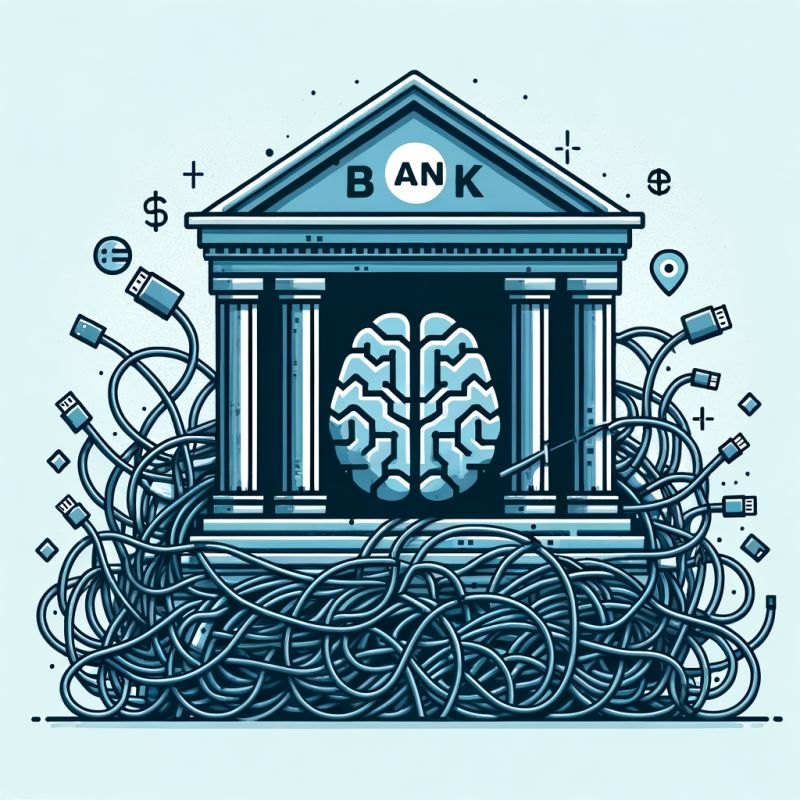
· 8mo agofrom LinkedIn It’s easy to hide behind best practices. But most best practices don’t work in complex organizations. Every big company is unique. Different tech stacks. Different politics. Different mess. You can’t copy-paste a framework from a white paper and expect it to hold up under real pressure. I’ve seen “best practices” break down in minutes when real-world problems hit. A global team with 15 legacy systems and 200 apps won’t survive on checklists and pretty roadmaps. What actually works? Start with culture. If your people don't care, your policies are useless. Face the ugly truth about your legacy systems. Don’t let vendors sell you “out-of-the-box solutions" when your house is built on spaghetti code. Don’t centralize everything. Local teams know their risks better than any global template. And stop chasing compliance for its own sake. Regulators don’t protect your business. Resilience does. Forget best practices. Build YOUR practices. Because in complex organizations, survival isn’t about following the crowd. It’s about doing what actually works in your world.
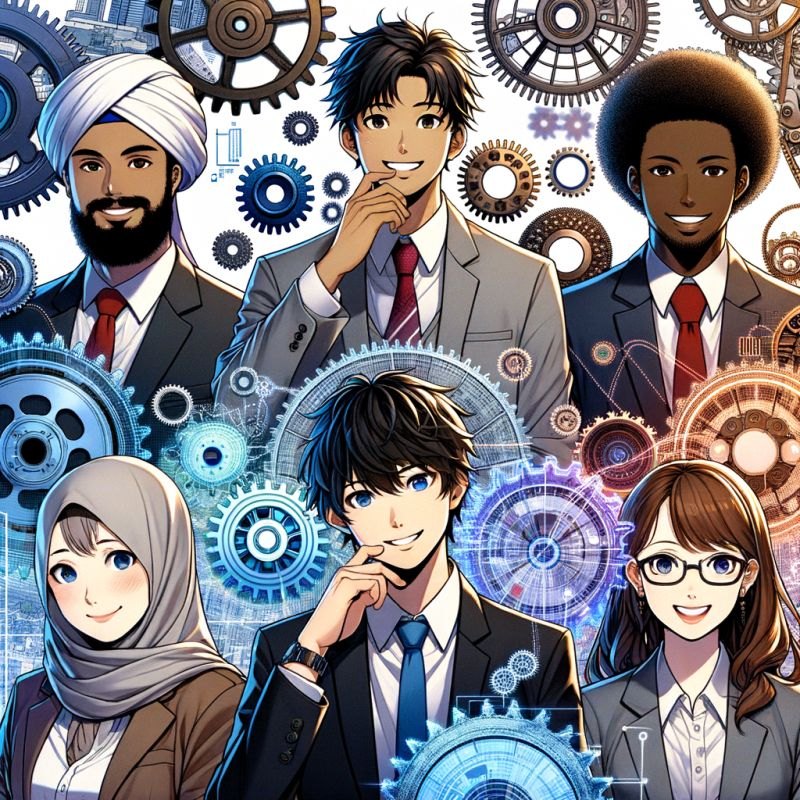
· 8mo agofrom LinkedIn AI Modernization, Cybersecurity modernization, and again modernization. Big words. Bigger budgets. Even bigger promises. Here’s the ugly truth: Most enterprise AI projects collapse when they hit legacy infrastructure. Not because the tech is bad. Not because talent is lacking. Nobody in the C-suite is willing to talk about the operational drag of 20-year-old systems running the business. can’t bolt AI onto spaghetti code and expect magic. can’t migrate fragile databases to the cloud and expect zero downtime. That’s what most “strategic roa” maps assume. Modernization is not about chasing the newest platforms and technologies, but much more about making brutal choices. What do you rip out? What do you refactor? What do you leave alone, for now? Here’s the part nobody wants to admit: True transformation means slowing down in the short term. It means telling the board that half-measures will burn more money than doing nothing. So you’re a C-suite exec talking scale, start the “Don’t “ ask, “How do we implement AI?” “What’s the real cost of integrating it with the mess we already have?” If you can’t answer, don’t push the go button. Yet.

· 8mo agofrom LinkedIn Lovely 😀
· 8mo agofrom LinkedIn Thank you, Steve Benton, for the opportunity to contribute to such a timely and meaningful discussion. The richness of the exchange, the openness of the dialogue, and the shared commitment to both the technological and human dimensions of cybersecurity made this session truly stand out. As AI continues to reshape our operational and cognitive landscape, recognising stress, burnout, and mental resilience as fundamental components of cyber resilience is not just important — it’s essential. Grateful to InfoTeam International, Ping Identity, and all the participants for an inspiring conversation here in Dubai. I look forward to continuing the dialogue.
· 8mo agofrom LinkedIn What’s actually killing SaaS? It’s a hard reality catching up, definitely not AI. It is the difference between a toy and a platform. SaaS exploded by stitching together shiny dashboards and manual workflows, then selling “enterprise” as a sticker price. Turns out, when anyone can build a decent interface, what’s left? Everyone’s fussing over AI “taking ”obs or “replacing feature X.” Still, nobody wants to talk about how many SaaS vendors never had anything worth protecting. The tech was UI. The “product” was the user experience. The only moat was inertia. Now AI can automate clicks, process data, and even patch together entire workflows across tools—no need for an “all-in-one” platform. The agent plugs in and does the tedious work faster and cheaper, with no human slip-ups. So what actually matters now? - Controls regulators can trust - Audit logs that can’t be massaged - Governance, you can’t bypass - Policy enforcement at scale - Infrastructure that’s non-negotiable for the business Banks, manufacturers, and critical infrastructure aren’t optional features. These are table stakes. Regulated industries have always known the difference between a toy and a platform. Now the rest of the market is learning fast. Compliance and auditability are the only features that scale when the UI is automated away. Selling “domain expertise” baked into your workflow? That’s toast. Agents will outlearn you, and do it at zero marginal cost. The next generation of winners doesn’t chase UI. They own the rails: trust, enforcement, and resilience in a world where automation is free. Everyone else just got made obsolete overnight, and the market correction is only getting started. Build for scrutiny. Build for liability. Or get ready for your TAM to evaporate. You can blame AI if you want. But SaaS was always going to crack under this kind of pressure. The difference is that it now happens in months rather than years.
· 8mo agofrom LinkedIn Is intelligence already a Commodity? – What Will Still Matter for CEOs For decades, companies competed on access to intelligence: The best analysts The sharpest strategists The most informed leadership teams That advantage is disappearing. With AI, advanced reasoning, and autonomous agents, intelligence is becoming: Abundant On‑demand Inexpensive In other words, intelligence is turning into infrastructure. For CEOs, the competitive battlefield is shifting from having intelligence to using it better than anyone else. Where will differentiation come from? 1️⃣ Strategic clarity AI amplifies direction. If your strategy is vague or fragmented, AI will just help you get lost faster. 2️⃣ Operating model and data foundations Winners will be the companies that redesign processes, data, and governance around AI – not those that simply bolt tools onto old structures. 3️⃣ Decision velocity with ownership Cheap intelligence is pointless if decisions are still slow, political, or blocked by fear. The edge will be fast, accountable decision‑making. 4️⃣ Trust, risk, and governance Regulators, boards, and customers will judge you on how safely and responsibly you scale AI, not just how aggressively you adopt it. 5️⃣ Leadership and culture Judgment, ethics, courage, and the ability to align people behind a direction do not commoditize. They become more important when everyone has the same tools. The question for the next decade is no longer: “Do we have AI?” It’s: “Can we turn unlimited intelligence into differentiated execution?” As senior leaders, that is now our real job. #CEO #CLevel #AI #Strategy #DigitalTransformation

· 8mo agofrom LinkedIn Every week, there are more AI tools, more frameworks, more headlines. Paradox: AI is making it harder to understand AI. Leaders used to struggle to find solutions. Now they drown in them. The big problem is not adoption. It is a selection. Noise everywhere. Too much hype, not enough clarity. Everyone is experimenting, but few have a real direction. The real risk in AI today? Chasing the wrong signals. Investing in fads, not value. The next competitive edge is obvious: using AI to filter the AI landscape. AI that sorts noise from substance. AI that maps tools to real business goals and risk. AI that separates hype from what actually works. AI that guides leaders, not confuses them. This is where the stakes are highest, especially for regulated and mission-critical sectors. Trying every new shiny thing will not win. Building intelligent clarity in this chaos will. In the age of AI overload, clarity isn’t a nice-to-have. It is the strategic edge.

· 8mo agofrom LinkedIn AI is becoming increasingly prevalent across the Gulf region. Among chief executive officers and boards in industries such as aviation, banking, and government, a common question arises: how can we adopt AI more quickly? Yet a more important question follows: who will ensure that we implement it correctly? What I find particularly remarkable about the Gulf is its strong culture of innovation and its willingness to invest in future technologies. This forward-looking mindset is a major reason I chose to live in Dubai — a place where ambition, execution, and long-term vision truly converge. Even in highly innovative environments, however, many AI initiatives remain confined to IT departments or stall after an initial pilot phase. This is not unique to the region; it is a global pattern. But this does not represent genuine digital transformation. It creates temporary momentum without lasting impact. For AI to deliver sustainable value in regulated and mission-critical sectors such as government, banking, insurance, and aviation, a different foundation is required: **1. Clear alignment with strategy and regulation.** In aviation, AI-driven risk models can only be deployed once every element of the process complies with strict safety standards and approved operational frameworks. **2. Accountability and transparency in governance.** In financial services, automated compliance controls become viable only when full auditability, data traceability, and regulatory assurance are firmly established. **3. Security and data protection by design.** Public-sector AI initiatives must embed strong access controls, privacy safeguards, and clear data segregation from the outset to protect sensitive information. Across all industries, one lesson remains consistent: If AI is not owned at the executive level, organizations struggle to manage its risks. Without clear leadership, scale can introduce exposure rather than value. The most successful AI transformations will not be defined by speed alone. They will be defined by trust, resilience, and responsible leadership. When these foundations are in place, innovation accelerates — and its impact becomes lasting. I am eager to hear how others are managing the balance between speed and responsibility.

· 8mo agofrom LinkedIn In most organisations, artificial intelligence is advancing faster than governance. Boards are pushing to maximise productivity, automation, and competitiveness. Yet far fewer organisations are asking the more difficult question: If an AI system makes the wrong decision, who is accountable? After decades working across Enterprise IT, Cybersecurity, Digital Transformation, and Enterprise Architecture in both Europe and the Middle East, one reality is clear: Technology risk becomes business risk long before governance is established. AI is no exception — especially when AI advances ahead of IA (Information Architecture). Without clear ownership, regulatory alignment, security controls, and ethical boundaries, AI initiatives can quietly introduce: • Uncontrolled data exposure • Regulatory and compliance breaches • Opaque decision-making processes • Reputational risk at board level For this reason, AI governance is no longer only an IT concern. It is a board-level responsibility. Accordingly, the role of the modern Chief Information Officer is evolving: From operating technology → to governing digital trust → to enabling safe, scalable, AI-driven value creation Organisations that recognise this shift early will not only innovate faster — they will do so securely, responsibly, and sustainably. This is where true digital transformation begins.
· 8mo agofrom LinkedIn Strength in leadership is not loud!! Is Leadership about titles, authority or visibility? In my opinion It is revealed in quiet moments: - when pressure is high - when uncertainty is real, and - when there is nothing personal to gain. Leadership is the ability to bring clarity to complexity, to stay calm in uncertainty, and to go ahead with trust, as opposed to control. Strength in leadership is not loud. It is steady and thoughtful and deeply human. This is also why meaningful leadership impact is consistently built: Step 1: See the whole system, not just the immediate result (System Thinking). Decisions reverberate long past the present moment. Step 2: When direction is a mystery, choose clarity over speed. And calm thinking will always be a competitive advantage. I have written a book about this step which will be published very soon (Clarity, not Certainty) There are 4 ways for leaders to create real impact: ✅ Listen deeply: Understanding precedes every good decision. ✅ Think systemically: Solve causes, not just symptoms. ✅ Act with calm under uncertainty: Stability breeds trust sooner than certainty. ✅ Enable others to grow: True leaders multiply capability, not dependence. Ask yourself: ↳ Do my own choices clarify or baffle? ↳ Am I reacting to noise or responding with insight? ↳ Are people stronger than before because I serve to lead them? Where have you seen calm, thoughtful leadership make the greatest difference? Share your thoughts below ⬇️ Follow for reflections on leadership, clarity, and meaningful transformation. ♻ Like, Comment, Repost to support thoughtful leadership ♻
· 8mo agofrom LinkedIn In one of my previous projects, I started with my colleagues an access check; our top person didn’t pass. Then they asked what the point of access checks were. The check itself: A usual quarterly check of who had special access, covering all the important systems – including executive accounts. The idea was to get rid of any high-risk permissions people didn’t really need. What we found: → Generally, people were okay – 92% good. → One executive account had full admin rights without business need. → A warning about a strange login place was never reviewed. Basically, our security setup did exactly what it should. What happened after that: Executive: Why are you questioning my access? Security: Because least-privilege is for everyone. Executive: I must move quickly. Security: Full admin power makes any break-in much worse. Executive: This holds leaders back. Security: It reduces organisational risk. Executive: Remove this control for executives. The email security got: “Executive work shouldn’t be slowed by strict technical rules. Future access checks should exclude senior leaders.” Security’s reply: If someone breaks into an executive account, they gain the highest control in the company. Leaving out executives creates the biggest opening for attackers. The leadership meeting: CEO: We must balance security and trust. Security: Trust without checking enables breaches. CEO: Avoid friction at the top. Security: Risk is highest at the top. CEO: Find something sensible. Security: Security is sensible. The “deal”: → Executives keep extra access. → Checks become informational only. → No remediation required. → Exception documented but ignored. This was security theatre. What this means: → Most power, least oversight. → Attackers target these identities first. → One breach becomes total breach. → Risk is known but invisible—until incident day. Three months later: An executive email was compromised via stolen token. Result: strategy documents exposed, emergency response, legal escalation. The question: “How did this happen?” The answer was already documented in the exception. Afterwards: → Emergency privilege reduction. → Access checks suddenly critical again. → Incident labeled “advanced threat.” Real cause: basic security ignored. The lesson: Rules that exclude power protect neither the company nor the leaders themselves. Real security is equal security. No fast lanes for important people. For security leaders facing exception pressure: Document the risk. Escalate clearly. Protect the organisation—even when it’s hard. Have you been asked to create security exceptions? How did you handle it? #cybersecurity #governance #leadership #risk #ciso #identity #security #business

· 8mo agofrom LinkedIn The contest for $5.5 trillion worth of skilled people in tech is now happening. Over 90% of chief executive officers are stating that skills in artificial intelligence are absolutely essential – however, the majority of large companies are still having difficulty locating people with the right qualifications. Here’s a look at the AI positions which are most needed – and a description of what those people do: Management Positions Chief AI Officer (JPMorgan): Establishes company-wide AI norms, safety limits, and how to put AI to use. Head / Vice President of AI (Walmart): Is in charge of worldwide AI groups, making the way the business runs in a huge number of shops better. Chief Data & AI Officer (AstraZeneca): Supervises data, machine learning, and the use of AI in discovering new medicines. Head of Applied AI (BMW): Gets self-driving technology out of research labs and into vehicles people actually drive. Director of AI (Unilever): Changes huge amounts of data into up-to-the-minute knowledge of the supply chain. Responsible AI Lead (Google): Makes certain AI is released safely and in an ethical way. AI Strategy / Transformation Leaders (HSBC, Siemens, Salesforce): Create services which put AI first, a plan for automation, and putting AI into products. Technical Positions AI Architect (Amazon): Creates large, broad systems for forecasting and recommending. Model Manager & Validator (Visa, AIG): Keep AI models correct, following the rules, and under control of risk. AI Developer / ML Engineer (OpenAI, Netflix): Make and launch smart systems on a large scale. AI Application & Platform Architects (SAP, Microsoft): Put AI into company software and cloud setups. AI Cybersecurity & Red-Team Engineers (CrowdStrike, Meta): Find attacks and put AI models under pressure to see how they do. Prompt Engineer (HubSpot): Make AI interactions work well in the real world. Data Scientists & Engineers (Pfizer, Goldman Sachs): Turn complicated data into forecasts and up-to-the-minute data streams. New Business Positions AI Customer Success (Zendesk): Forecast when customers will stop using a service, and safeguard income. AI Accounting, Audit, and Reporting (Deloitte, EY, Citi): Automate financial tasks, find fraud, and lower the risk of not following regulations. AI Compliance & Payroll (Deutsche Bank, ADP): Watch for legality and make predictions about what the workforce will cost. AI HR Analytics (IBM): Make better employee retention, performance, and who will be promoted. This isn’t from a science fiction story – these jobs are real, and there aren’t nearly enough people to fill them. What AI positions are coming up in your organisation? Add yours below – let’s make a proper list.

· 8mo agofrom LinkedIn Now let me update the Leads tab, Finance tab, Email tab, and Menu tab in parallel using background agents, while I handle the Apps page and resource pages." 2 Task agents launched (ctrl+o to expand) ├─ Add readOnly to leads/finance/email/menu tabs │ ⎿ Running in the background (shift+↑ to manage) └─ Add permission guards to apps page ⎿ Running in the background (shift+↑ to manage) SaaS will be redefined in the near future!
· 8mo agofrom LinkedIn IA and then AI — Information Architecture first, Artificial Intelligence comes second In every post you read today you discover the AI fingerprints. Everyone rushes toward Artificial Intelligence expecting transformation, automation, and instant insight. The real foundation of meaningful AI is rarely discussed: Information Architecture. Without clear data structures, governance, ownership, quality, and semantic consistency, AI does not create intelligence — it simply amplifies confusion. Back in the 90s we were looking for professional maturity and introduced CMMIs and today true digital maturity indexes are needed to secure the organisation of information design, trust, and usability across the enterprise. Only when information is structured with intention and when information classification and handling policies are in place, we would be able to deliver a secured data foundation, to ease business decisions, and excel with a sustainable innovation. First architecture the information. Then empower it with intelligence.
· 8mo agofrom LinkedIn Many enterprises love Expensive Chaos… After more than three decades working across enterprise IT, cybersecurity, architecture, and large-scale digital transformation in Europe and the Middle East, I still see the same pattern repeating in many large organizations: technology is adopted faster than the organization is prepared to absorb it. Today, the clearest example is Artificial Intelligence. Not because AI is flawed — but because its adoption is often disconnected from governance, compliance, security, and real business enablement. Let me share what I repeatedly observe in the field: 1. Governance is missing AI pilots appear everywhere while ownership, decision rights, and accountability remain unclear. I have seen enterprises deploy AI assistants in sensitive workflows without defining who is responsible for outcomes, risks, or ethical boundaries. When goals are missed, the discussion turns to blame instead of learning. 2. Compliance is an afterthought Regulatory exposure grows silently. Organizations experiment with AI handling customer or operational data before assessing GDPR, PDPL, or sector obligations — creating hidden legal, reputational, and data-residency risks driven by technology hype. 3. Security is underestimated AI expands the attack surface. From prompt injection to data leakage, model abuse, and unverified code sources, threats evolve faster than traditional controls. Without Zero-Trust thinking and proper risk governance, innovation becomes vulnerability. 4. Business enablement is forgotten The most overlooked dimension. No structured training. No executive workshops. No communication strategy. Employees are expected to “use AI” without understanding when, why, or how it creates value. Technology alone never transforms an enterprise — people and operating models do. 5. Value delivery is not structurally governed Programs and initiatives often start without clear articulation of their business and technical value. In mature environments, innovation is guided through demand management and enterprise architecture, connecting business capabilities, stakeholders, information systems, and technology domains. Without this alignment, even powerful AI becomes an isolated experiment instead of an enterprise value driver. What concerns me most is this: Many vendors highlight impressive capabilities and dashboards, yet rarely address governance maturity, compliance exposure, organizational readiness, or cultural adoption. For leaders, these are the true determinants of success. Because in large enterprises, failure rarely comes from weak technology — it comes from weak alignment. From my experience leading enterprise programs sustainable innovation happens only when technology, governance, risk, architecture, and people evolve together. AI will transform enterprises — but only the well-governed and well-aligned ones will truly benefit.
· 8mo agofrom LinkedIn I am very delighted about the invitation and the reception to contribute to this event today! Thank you Yasmin and Omar from the organisation team. I hope to see you soon on the next event 🤍
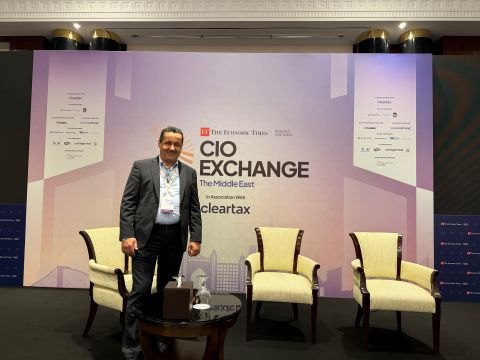
· 9mo agofrom LinkedIn Bridging Global Strategy with MIT Innovation... In over 30 years of navigating the technology landscape—spanning Banking, Manufacturing, and Government in Europe to Oil & Gas, Retail, and Aviation in the Middle East—the most important lesson I’ve learned is that leadership is not a destination, but a continuous upgrade. For this reason, I’m thrilled to share that I am currently on the final stretch of my Chief Technology Officer (CTO) Certification at MIT. 🎓 It is a milestone in my professional journey of which I am deeply proud. Why now? Because the intersection of AI Leadership and Cyber Resilience is no longer a "future trend"—it is the baseline for survival. My current work at The Emirates Group has reinforced that modernizing complex IT landscapes requires more than just technical skill; it requires a strategic framework that converts disruptive technology into sustainable business value. Key takeaways I’m bringing back to the GCC ecosystem: Architecting for AI: Moving beyond experimentation toward audit-ready, enterprise-wide execution. The Zero-Trust Mindset: Why cultural resilience is as vital as technical firewalls in protecting the modern enterprise. Value-Driven Governance: Ensuring our technology portfolios (up to €20M+) align strictly with Board-level ROI. To my network in the Middle East and beyond: How is your organization balancing the speed of AI adoption with the necessity of structured excellence? Let's discuss in the comments... #CTO #MIT #DigitalTransformation #EmiratesGroup #CyberSecurity #DubaiTech #Leadership #AIGovernance #ExecutiveGrowth
· 9mo agofrom LinkedIn In Krisen und tiefgreifenden Transformationen verändert sich Führung grundlegend. Eine meiner zentralen Aufgaben in solchen Phasen ist es, das Team konsequent vor unnötigem Rauschen abzuschirmen. Wenn Strukturen wanken, Prioritäten sich verschieben und Entscheidungen unter Zeitdruck getroffen werden müssen, wird Ablenkung zur versteckten Steuer auf jede Organisation. Sie verlangsamt Entscheidungswege, fragmentiert Verantwortung und schwächt genau dann die Leistungsfähigkeit, wenn sie am dringendsten gebraucht wird. Aus Erfahrung weiß ich: In solchen Situationen müssen Führungskräfte als aktive Filter agieren. Nicht alles, was laut ist, ist relevant. Nicht jede Eskalation verdient sofortige Aufmerksamkeit. Priorisieren, klar schneiden, bewusst verzögern oder abfedern – und externen Druck dort aufnehmen, wo er entsteht –, damit Teams handlungsfähig bleiben. Gleichzeitig entscheidet sich Führung unter Druck nicht durch Aktionismus, sondern durch Gelassenheit. Gerade in Transformationsphasen ist Unsicherheit real. Sie zu verdrängen hilft nicht. Emotionale Selbstregulation gehört dann zur Führungsarbeit. Angst verbreitet sich schneller als Fakten. Panik schneller als jeder Maßnahmenplan. Gelassene Führung löst die Komplexität einer Krise nicht. Sie verhindert, dass sie eskaliert. Ich habe mehrfach erlebt, wie Klarheit zurückkehrt, Entscheidungen besser werden und Teams resilienter agieren, wenn Führung den Fokus schützt und auch in kritischen Momenten Ruhe ausstrahlt. Wie erlebt ihr Führung in Krisen oder Transformationen? Was hilft euch, den Fokus zu halten und Handlungsfähigkeit zu bewahren, wenn der Druck steigt? Ich freue mich auf den Austausch.
· 9mo agofrom LinkedIn Project Management: from control-by-reporting into leadership-by-insight I’ve led projects through tight deadlines, complex transformations, and uncomfortable transitions — tech rollouts, restructurings, turnarounds. Speed was rarely the real problem. Habits were. Reports arrived after issues had already taken root. Clarity came late. The fundamentals never changed: start with initiation, plan carefully, execute and control under pressure, then close and learn. I’ve seen this lifecycle work across continents, delivery models, and cultures. What has changed is scale and velocity. Everything is more connected. Risks travel faster. Waiting to “see” is no longer enough — you need to see ahead. AI helps do exactly that. Early on, it challenges assumptions by learning from past projects and real conditions. During planning, it exposes weak dependencies, stretched timelines, and thin resourcing before teams feel the pain. In execution, where governance, compliance, security, business enablement, and technology collide, AI connects the dots while there is still time to act — not to replace judgment, but to sharpen it. At closing, it finally does what we’ve always struggled with: turn delivery data and experience into insights that actually shape what comes next, instead of fading into forgotten reports. This isn’t about chasing tools or replacing people. It’s about returning project leadership to what it should be: foresight, clarity, and calm decision-making in complexity. That’s the real shift — from control-by-reporting to leadership-by-insight. 💬 What weighs most on your projects today: governance decisions, compliance pressure, security risk, business alignment, or technology complexity?
· 9mo agofrom LinkedIn Why so many good ideas die before they’re built and why experienced leaders share results, not drafts… Most ideas don’t fail because they’re bad, they fail because they’re exposed too early. We live in a culture that rewards visibility: Updates, announcements, teasers, “excited to share…” posts. But there’s a quiet cost to this. Before an idea is stable, attention doesn’t help it grow — It pulls it apart. Early exposure invites three things that fragile ideas don’t survive well: * Doubt * Noise * External pressure … and suddenly, progress is measured in reactions instead of results. Momentum turns into explanation. Focus turns into defense. In all the projects I have been responsible for, I’ve noticed a consistent pattern: The projects that worked were built quietly. The ones that struggled were discussed early. Not because people wished them harm — but because not everyone who smiles has invested in your success, and not every question is neutral. Some ideas need incubation, not applause. This isn’t an argument against transparency. It’s an argument for timing. Strong outcomes tolerate visibility. Fragile ideas require protection. That’s why experienced leaders share results, not drafts. They understand that discretion is not secrecy —it’s discipline. A simple rule worth remembering as we move into 2026: Keep it private until it’s permanent. Not everything needs an update. Not every move needs validation. You don’t owe the process to the audience. Build quietly. Let execution speak. And when the results appear, an explanation won’t be necessary.
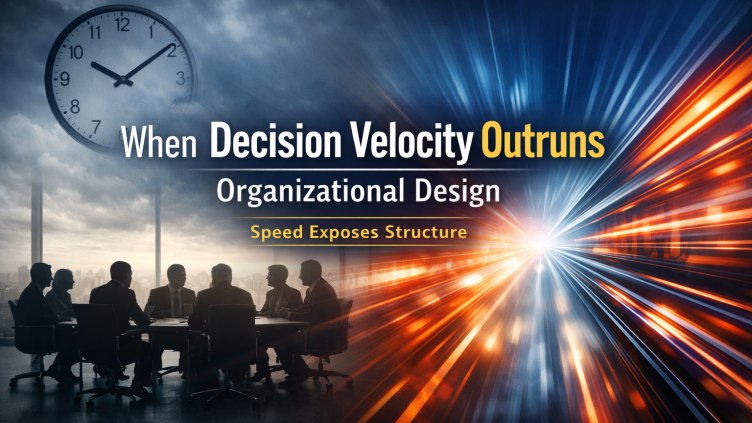
· 9mo agofrom LinkedIn AI is transforming the pace of decision-making across organizations. When organizational design, accountability, and risk ownership are well-defined, this acceleration unlocks significant value. The challenge ahead lies not in adoption but in ensuring that the organization is structurally ready to embrace decision-making at the speed of AI.
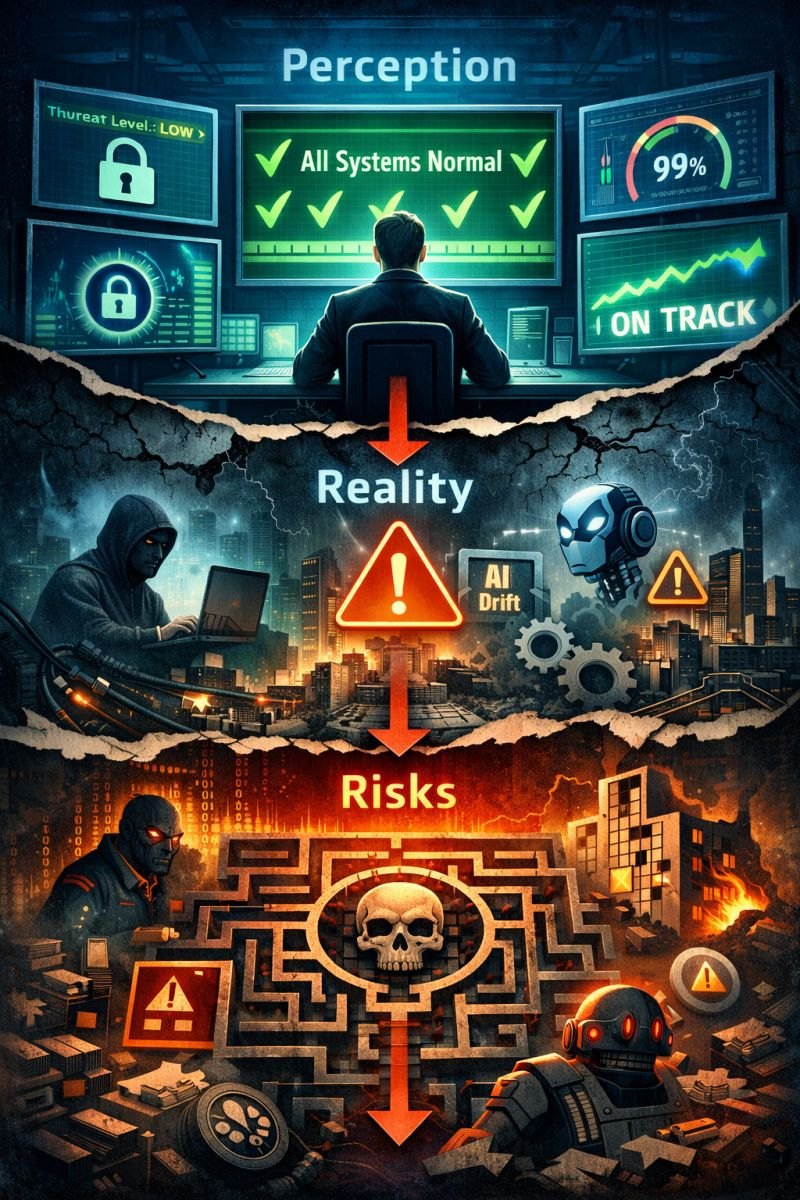
· 9mo agofrom LinkedIn Cognitive bias: the hidden failure mode in cybersecurity, AI, and digital transformation. The most dangerous risks in high-stakes contexts are rarely technical. They are cognitive. Decades of study in behavioral economics and organizational theory demonstrate that confirmation bias is exacerbated by pressure, scale, and sunk cost (Kahneman). Leaders subconsciously prefer signals that rationalize prior decisions and brush aside weak anomalies as “noise.” This bias is compounded in cybersecurity and AI-powered settings. Security dashboards turn green. AI models report improving accuracy. Transformation programs hit milestones. And yet: • Attack surfaces quietly expand. • Model drift goes unnoticed. • Architectural complexity increases while controllability decreases. James March warned that organizations will optimize for exploitation of existing beliefs at the expense of exploration. Karl Weick told us that institutions “make sense” of reality in ways that maintain coherence, not necessarily truth. This explains why: • Breaches are often recognized in hindsight. • AI failures are labeled “unexpected” despite prior signals. • Transformations technically succeed but operationally weaken the enterprise. Metrics don’t lie — metrics frame reality. The leadership question is no longer: “Are we compliant, secure, or on track?” It is: “What are we structurally incentivized not to notice?” Resilient organizations design bias-aware governance. • Red-team challenge embedded in decision cycles. • Anomaly visibility elevated above KPI averages. • Separation of delivery success from risk ownership. • Executive forums where uncomfortable data is rewarded, not penalized. In complex systems, failure is rarely sudden. It is cognitively engineered over time. And the most dangerous blind spot… is believing that intelligence alone prevents it.
· 9mo agofrom LinkedIn 2026: Build lean. Think bold. Execute fearless. The future belongs to the efficient.
· 9mo agofrom LinkedIn Do you know what is the largest Privileged Population we are not governing? For every human identity in every enterprise, there are now 20+ machine identities. They’re growing at double-digit rates every year. No chance to comply or to govern. You name it: Service accounts. API keys. Tokens. Certificates. Workloads. Bots. AI agents. They all authenticate automatically. Many of them do run with persistent privileged access. Most with no clear human ownership! Modern breach analysis shows that a large share of incidents are identity-driven, and a significant portion involve non-human identities rather than users. Again to remember: No chance to comply or to govern. Why machine identities are inbetween very risky: • Created dynamically by cloud, DevOps, and AI platforms • Outside traditional IAM joiner/mover/leaver controls • Credentials are hardcoded, shared, orphaned, or never rotated • Behavioral baselining is harder than with humans • AI agents dramatically increase blast radius when compromised This is not a tooling problem. It’s a governance and ownership problem. Mature organizations are now treating machine identities as a full lifecycle discipline, not a technical edge case: Continuous discovery across cloud, SaaS, CI/CD, and AI Least-privilege entitlements Centralised secrets management and rotation Explicit human ownership and dependency mapping Real-time monitoring and anomaly detection A shift from static credentials to ephemeral, policy-based access If auditors, insurers, or regulators asked today: “How many machine identities do you have — and who owns the risk?” Would you be able to answer confidently? I would love to read your opinions! #CyberRisk #MachineIdentities #NonHumanIdentities #IdentitySecurity #IAM #PAM #ITDR #AISecurity #CloudGovernance #EnterpriseSecurity

· 9mo agofrom LinkedIn Another journey has started! I’m excited to join the upcoming cohort of the MIT Professional Education Chief Technology Officer Program. Over the next year, I will be exchanging perspectives with world-renowned MITPE thought leaders, industry experts and senior executives from all over the world. Looking forward to the learning journey! If you would like to know more about the program, please click here: http://bit.ly/3WLB6W8 #MITProfessionalEducation #MITDigitalPlusPrograms #MITPECTO #LifeLongLearning #Leadership #TechnologyDisruption #BusinessDevelopment
· 10mo agofrom LinkedIn 🎓 A milestone reached — and a responsibility accepted. I am proud to announce that I finished a Doctorate in Artificial Intelligence and Digital Transformation Leadership. This journey combined years of hands-on executive practice with deep academic reflection on how AI, digital systems, and cybersecurity reshape leadership, accountability, and trust in modern enterprises. What matters most to me is not the title, but the responsibility it brings: to challenge tool-centric thinking, to elevate governance over hype, and to ensure that AI serves strategy, resilience, and people. With gratitude to everyone who supported, questioned, and inspired this journey—thank you. The work continues.
· 10mo agofrom LinkedIn Why Most Digital Transformations Fail Quietly. Digital transformations rarely fail loudly. No single outage, no catastrophic failure, no news outlet-worthy incident. They fail quietly. Budgets get eaten, platforms are handed over, dashboards become green — and yet the organization looks more complicated, slower, and more difficult to control than ever. There is more risk, less visibility. Now more than 30 years serving across aviation, banking, telecom, retail operations, and manufacturing on boards and executive forces, the same formula has continued to unfold. Technically, these transformation projects work, but institutionally they don’t. The underlying cause is seldom technology. It's rather the lack of clear executive ownership. When transformation is reframed as a “program” rather than a lasting paradigm shift in how decisions are made, a number of things occur. Architectural choices pile up without accountability. Ownership of risk becomes dispersed among committees. Cybersecurity and compliance become reactive control functions. Leadership misses the line of sight between investment, risk and outcome. This is not a maturity issue—it is a governance exposure, especially in heavily regulated and mission-critical environments. Successful organizations do a different thing. They: Consider architecture not a technical construct, but an executive decision framework. Anchor cybersecurity and cloud adoption on the ownership of risk, not tool choice. Demand transparency about decision making, even if it stifles early momentum. Recognize that speed without governance breeds fragility, not advantage. The most successful boards I’ve worked with clearly understand one principle: Digital transformation alters the organization’s risk profile before it alters its capabilities. Leaders who understand this early on don’t just ask, “What are we building?”. They ask “Who owns the consequences?”. That question – and being asked time and again – is what distinguishes sustainable change from silent failure. UAE-based | Involved in board-level conversations relating to digital transformation, cyber governance and operational resilience in the GCC and Europe.
· 4y agofrom LinkedIn Just finished the course “Enterprise Architecture Foundations” by David Swersky! Check it out: https://lnkd.in/dFFU7T5f #enterprisearchitecture.
· 5y agofrom LinkedIn 100% security means 0% functionality 100% functionality means 0% security Do not go for the extremities
· 5y agofrom LinkedIn Absolutely true! Listening is an art!
· 7y agofrom LinkedIn Just finished the course “SharePoint Framework for Developers: 1 Understanding the Toolchain”! #office365 #sharepoint
· 10y agofrom LinkedIn Looking for System-Administrator Microsoft Windows Server Experience: - Config and Admin of Microsoft Windows Server - Special TS 2008 with Client Virtualisation and Java Client / IE11/8 including Enterprise Mode - Experience with Powershell Scripts - Experience with Installation, Configuration und Administration of Microsoft Client Systems (Windows 7) and MS Browser Versions with Java Client 1.6 -1.8 - Experience in IT-Documentation in regulatory area (Banks / Telekom / Energie) - Teamwork Start: June
· 10y agofrom LinkedIn Ich suche System-Administration Microsoft Windows Server Erfahrung: - Konfiguration und Administration Microsoft Windows Server - Spezielle TS 2008 mit Client Virtualisierung sowie Java Client und IE11/8 und Enterprise Mode - Erfahrung mit der Implementierung von Powershell Skripten - Mehrjährige Erfahrung im Bereich Installation, Konfiguration und Administration von Microsoft Client Systemen (Windows 7) und MS Browser Versionen sowie Java Client 1.6 -1.8 - Erfahrungen mit der IT-Dokumentation in regulatorisch besonders exponierten Branchen - Teamfähigkeit
· 10y agofrom LinkedIn 
· 10y agofrom LinkedIn 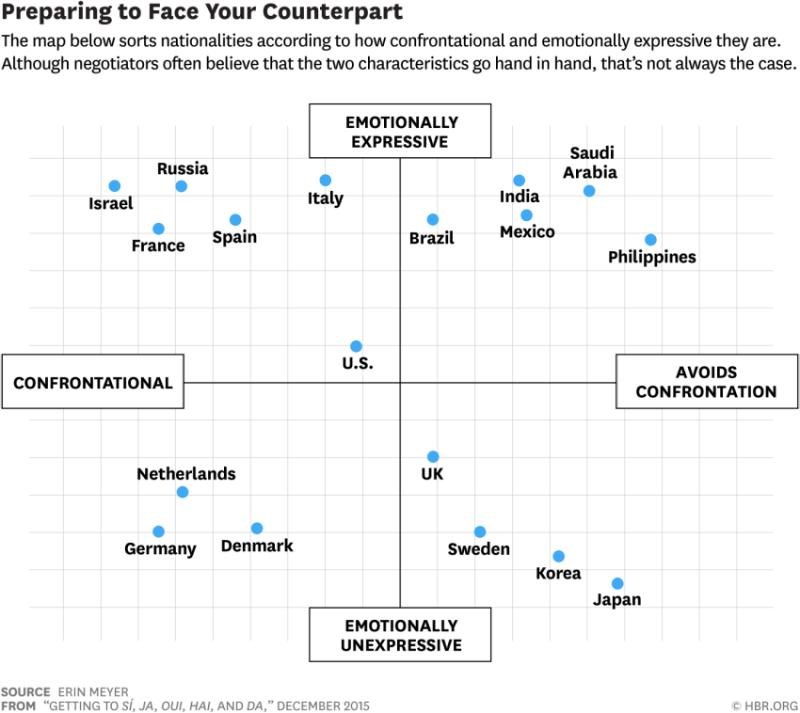
· 10y agofrom LinkedIn 
· 10y agofrom LinkedIn Realtime true
· 12y agofrom LinkedIn I am still looking for BizTalk developers 2013 for a challenging project in the Netherlands. If you are interested please let me know
· 12y agofrom LinkedIn Any Biztalk developer free for a new challenge with BizTalk 2013?
· 15y agofrom LinkedIn Omra Eco Early Ramadan http://shar.es/H5ktn